


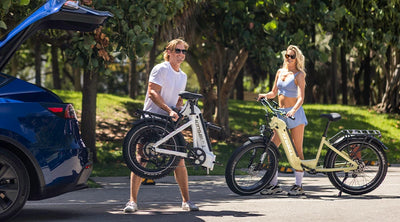










Mid-Drive vs. Hub Motor E-Bikes: Which Is Better For You? (2026 Guide)

When choosing an electric bike, the motor type is the single most important factor affecting performance, riding feel, maintenance, and price. In today’s market, the two dominant systems are mid-drive motors and hub motors.
Understanding how these systems work—and which one delivers the highest value—is the key to making a smart investment. In this comprehensive guide, we’ll break down the key differences, analyze the true cost of ownership, and explain why the high-torque motors equipped on Kingbull e-bikes offer the best cost-effectiveness for your daily rides.
What Is a Hub Motor E-Bike?
A hub motor is integrated directly into the wheel (most commonly the rear wheel on Kingbull models). Because the motor drives the wheel directly, it provides electric assistance independently of the bike’s chain or gears.
The Riding Experience
Hub motors deliver smooth, predictable power that is especially noticeable during takeoff and steady cruising. This "push" sensation makes them the go-to choice for city commuting, beach cruising, and relaxed long-distance exploration. If you want a bike that does the heavy lifting for you without constant gear shifting, a hub motor is unbeatable.
Advantages of Hub Motors
-
Unbeatable Value: Lower manufacturing costs translate to more affordable retail prices for riders. You get more power per dollar.
-
Minimal Maintenance: Since the motor bypasses the drivetrain, there is no extra strain on your chain or gears.
-
The Throttle Lifesaver: Even if your chain breaks miles away from home, the throttle operates independently and can get you back safely.
-
Proven Reliability: With fewer moving parts and a sealed housing, these motors are built to endure harsh weather conditions.
Limitations
-
Less efficient on extremely steep, technical mountain trails.
-
Heavier wheel can slightly affect agile, technical handling.
-
Power delivery feels more “electric push” than “organic pedal-like.”

What Is a Mid-Drive Motor E-Bike?
A mid-drive motor is mounted at the bike’s center, right between the pedals (the crankset). It drives the bike through the chain, leveraging the bike’s existing gears to multiply torque.
The Riding Experience
Mid-drive motors offer a very "natural" feel because the power is tied directly to your pedaling cadence via advanced torque sensors. They are highly responsive, making them a favorite for technical off-road trails and extreme vertical climbs where balancing weight is critical.
Advantages of Mid-Drive Motors
-
Extreme Hill Climbing: By using the bike's mechanical gears, these motors can climb incredibly steep terrain without overheating.
-
Centralized Weight: Placing the motor low and in the middle improves the bike's balance for technical maneuvers and jumps.
Limitations
-
Significantly Higher Price: Mid-drive e-bikes usually cost $1,000 to $2,000 more than comparable hub motor models.
-
Accelerated Wear and Tear: Massive torque goes straight through the chain and cassette, leading to frequent chain snaps and part replacements.
-
Complex Maintenance: Repairs often require specialized bike shop mechanics and proprietary tools.
-
No Chain, No Ride: If the chain breaks, the bike becomes completely immobilized—the motor cannot help you.
Interactive Tool: Which Motor Fits Your Riding Style?
To help you visualize how these two motor types perform under different conditions, use our interactive simulator below. Toggle between flat roads, urban hills, and mountain trails to see how efficiency, torque, and maintenance costs shift.
Motor Type Comparison

Hub Motor vs Mid-Drive: Head-to-Head Comparison
| Feature | Hub Motor (Kingbull) | Mid-Drive Motor |
|---|---|---|
| Motor position | Integrated into the wheel hub | Mounted at the crankset |
| Riding feel | Smooth and predictable | Natural and sporty |
| Hill performance | Good for urban inclines | Excellent for steep climbs |
| Maintenance | Low, simple upkeep | Medium to high |
| Weight distribution | Weight concentrated in the front or rear wheel | Weight centralized in the middle of the frame |
| Price Point | Budget-Friendly/ Best Value | Premium/ High Initial Investment |
| Best use cases | Commuting, leisure, beach cruising, utility | Technical mountain biking, cargo hauling |
-
Strong torque for daily riding and urban hills
-
Longer-lasting drivetrains with less maintenance
-
Competitive pricing without sacrificing performance
-
A smoother, quieter ride ideal for everyday use

Why Kingbull Specializes in High-Performance Hub Motors?
At Kingbull, we don’t build bikes for the laboratory; we build them for real-world riders who demand reliable power, long-term durability, and unmatched value. By equipping our e-bikes with premium 750W Bafang rear hub motors, we deliver a riding experience that makes mid-drive systems unnecessary for 90% of cyclists.
The Hub Motor Advantage: Why pay a $1,500 premium for a complex mid-drive system when a high-torque 750W hub motor delivers the same cruising speed with zero maintenance hassle?
By focusing on high-performance rear hub setups, Kingbull delivers:
-
Massive Real-World Torque: Optimized for quick acceleration from stoplights and conquering urban hills with ease.
-
Drivetrain Longevity: Your chain and cassette will last up to 3x longer compared to mid-drive systems because the motor power goes straight to the rubber, not the chain.
-
Affordable Excellence: Instead of blowing the budget on an expensive mid-drive motor, we reinvest those savings into premium specs that actually matter—like high-capacity Samsung batteries and responsive hydraulic disc brakes.
Find Your Perfect Match: The Kingbull Lineup
Depending on your daily environment, we have tailored our hub-motor technology into two distinct premium e-bikes:
1. For All-Terrain Power & Heavy Duty: [Kingbull Hunter 2.0 All-Terrain Fat Tire E-Bike]
If your daily route involves gravel paths, sandy beaches, snowy winters, or carrying heavy cargo, the Kingbull Hunter 2.0 is your ultimate machine.
-
The Powerhouse: Equipped with a rugged 750W Bafang hub motor and ultra-wide fat tires, it provides unparalleled traction and stabilizing weight distribution.
-
Best For: Weekend adventurers, hunting trips, or heavy-duty utility commuting.
2. For Sleek City Commuting & Speed: [Kingbull Literider 2.0 Lightweight Commuter E-Bike]
If you are looking to breeze through traffic, slide into a bike rack effortlessly, and enjoy a nimble, lightweight ride, the Kingbull Literider 2.0 is engineered for you.
-
The Urban Cruiser: Merging the low-maintenance perks of the hub motor with a streamlined frame, it delivers high-efficiency cruising and effortless handling on asphalt and city concrete.
-
Best For: Daily office commuters, college students, and urban fitness riders.

Final Verdict: Which Is Better for You?
-
Choose a Hub Motor if: You are an urban commuter, a weekend explorer, or a utility rider who wants reliable speed, powerful throttle backup, and absolute minimal maintenance without breaking the bank.
-
Choose a Mid-Drive Motor if: You are an experienced mountain biker tackling technical singletrack trails or vertical off-road terrain where price is no object.
For the vast majority of real-world riders, a high-quality hub motor delivers the ultimate balance of performance, freedom, and price.


Leave a comment