


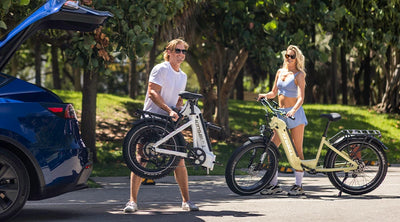









Kingbull Hunter 2.0S vs. Cyrusher Zenith: Two Fat Tire E-Bikes for the Outdoors

When your rides go beyond smooth pavement, the right electric bike can make a big difference. Fat tires, suspension, strong motors, and a larger battery can help riders handle gravel roads, uneven trails, grass, and other mixed terrain with more confidence.
Two models worth comparing are the Kingbull Hunter 2.0S and the Cyrusher Zenith. Both use 26 × 4.0-inch fat tires and 750W motors, but they take slightly different approaches to outdoor riding.
⚡At a Glance: Hunter 2.0S vs. Cyrusher Zenith
| Feature | Kingbull Hunter 2.0S | Cyrusher Zenith |
| Current Price | $899 | $1,399 |
| Motor | 750W / 1300W peak | 750W |
| Max Torque | 85Nm | 95Nm |
| Battery | 864Wh (18Ah) | 780Wh (15Ah) |
| Claimed Range | Up to 80 miles | Up to 60 miles |
| Top Speed | 28 MPH | 28 MPH |
| Tires | 26 × 4.0" fat tires | 26 × 4.0" fat tires |
| Suspension | Front suspension fork | Front suspension |
| Brakes | Hydraulic disc brakes | Hydraulic disc brakes |
| Drivetrain | Shimano 7-speed | Shimano 7-speed |
| Sensor | Cadence sensor | Torque & cadence sensors |
| Max Payload | 400 lb | 350 lb |
| Rider Fit | 5'3"–6'6" | 5'1"–6'4" |
Specifications and pricing are based on the manufacturers' current product pages and may change.
⚡Power for Different Types of Riding
Both bikes offer a 750W motor and speeds up to 28 MPH, giving riders plenty of assistance for everyday riding and outdoor adventures.
The Hunter 2.0S adds up to 1300W of peak power and 85Nm of torque, providing strong assistance when riding over hills, loose surfaces, or longer routes. The Zenith is rated at 95Nm of max torque, putting more emphasis on responsive pulling power, especially when climbing.
For riders comparing the two, motor numbers are only part of the picture. Terrain, rider weight, cargo, tire pressure, and battery level can all affect how an e-bike feels on a climb.
🔋Battery & Range
Battery capacity is one of the biggest differences between these two fat tire electric bikes.
The Hunter 2.0S comes with an 864Wh battery and a claimed range of up to 80 miles under ideal conditions. The Zenith uses a 780Wh battery and is rated for up to 60 miles. Actual range will vary depending on terrain, rider weight, assist level, temperature, wind, and throttle use.
That difference matters if your typical ride involves long stretches between charging points.For shorter trail rides and weekend exploring, both provide substantial battery capacity. For riders who regularly plan longer outdoor routes, the Hunter 2.0S puts more emphasis on battery capacity and range.

🛞Fat Tires & Suspension
Both bikes use 26 × 4.0-inch fat tires, giving them a planted feel across pavement, gravel, dirt roads, and other mixed surfaces.
The Hunter 2.0S uses a front suspension fork to help absorb bumps while keeping the setup relatively straightforward.
The Zenith also uses 26 × 4.0-inch tires and adds a suspension-focused setup designed for trail and mixed-terrain riding. Cyrusher positions the Zenith specifically around trails and city riding.
If your rides frequently include rougher surfaces, suspension becomes an important part of the decision. If you mainly ride gravel roads, park paths, and smoother trails, tire size and battery capacity may matter more.
🏕️Long Rides vs. Shorter Adventures
Not every outdoor rider needs the same kind of range.
If your typical ride is a couple of hours around local trails or nearby roads, a 60-mile claimed range can provide plenty of flexibility. The Zenith's combination of torque, front suspension, and fat tires makes it suitable for riders who want to mix city riding with recreational trail rides.
The Hunter 2.0S takes a different approach. Its larger 864Wh battery and up to 80-mile claimed range are particularly useful for riders who want to spend more time riding before returning to a charger.
For day-long outdoor trips, hunting and camping trips, or longer backcountry routes, battery capacity becomes more than just a specification—it can influence how far you can plan to go.
🎒Carrying Gear on Outdoor Rides
Outdoor riding often means carrying more than just the rider.
The Hunter 2.0S supports a 400 lb maximum payload, while the Zenith is rated for 350 lb. The Hunter also has a rear rack with a listed load limit of up to 150 lb.
That can be useful for camping equipment, backpacks, groceries, or other cargo. Riders who regularly carry additional gear may want to pay particular attention to the total payload rating rather than looking only at motor power.

🎯Torque Sensor vs. Cadence Sensor
Another difference is how the two bikes respond to pedaling.
The Hunter 2.0S uses a cadence sensor, while the Zenith combines torque and cadence sensors.
A cadence sensor primarily detects whether the pedals are turning and then provides assistance based on the selected level. A torque sensor can also respond to how much force the rider puts into the pedals, which can create a more direct and natural-feeling pedal-assist experience.
This doesn't automatically make one system better for every rider. Some riders prefer the straightforward assistance of a cadence-based system, while others may value the more responsive feel of torque sensing.
🚴Everyday Use & Outdoor Versatility
A fat tire electric bike doesn't have to be limited to trails.
Both the Hunter 2.0S and Zenith can fit a variety of riding situations, from neighborhood roads and bike paths to gravel roads and recreational trails.
The Hunter 2.0S is particularly suited to riders who want one bike that can handle longer outdoor trips while also carrying additional gear. Its fat tires, 864Wh battery, 400 lb payload, lights, hydraulic brakes, and 7-speed drivetrain give it a practical setup for riders who want versatility beyond pavement.
The Zenith focuses on a similar all-terrain concept, with its 750W motor, 95Nm torque, 780Wh battery, front suspension, and 26 × 4.0-inch tires.
💰Price & Overall Value
The two bikes also sit at different price points.
The Hunter 2.0S is currently listed at $899, while the Cyrusher Zenith is listed at $1,399. That's a $500 difference based on the current listed prices.
The Zenith offers a torque-and-cadence sensor setup and a higher listed maximum torque figure. The Hunter 2.0S, meanwhile, combines a larger battery, longer claimed range, higher payload capacity, and a lower current price.
For shoppers comparing these two models, the important question isn't simply which bike has more features. It's which combination of features makes the most sense for the way you plan to ride.
🧭Which One Fits Your Ride?
Choose the Hunter 2.0S if you:
- Want a lower purchase price
- Prioritize battery capacity and longer rides
- Need higher overall payload capacity
- Ride a mix of pavement, gravel, dirt roads, and trails
- Want a 26 × 4.0 fat tire electric bike for outdoor adventures
Consider the Cyrusher Zenith if you:
- Put more emphasis on trail-focused comfort
- Prefer its suspension setup
- Want 95Nm of torque
- Don't mind spending more for its equipment and design
- Primarily want a fat tire e-bike for mixed city and trail riding
🌄The Bottom Line
The Kingbull Hunter 2.0S andThe Kingbull Hunter 2.0S and Cyrusher Zenith are built around a similar idea: a 26 × 4.0 fat tire electric bike that can move comfortably between pavement and outdoor terrain.
The Zenith puts more emphasis on torque output and its torque-and-cadence sensor system, while the Hunter 2.0S focuses on battery capacity, range, payload, and price.
With its 864Wh battery, up to 80-mile claimed range, 400 lb payload, 150 lb rear-rack capacity, and $899 current price, the Hunter 2.0S offers a practical setup for riders who want to travel farther and carry more without moving into a higher price bracket.
For riders planning longer adventures, carrying extra gear, or looking for a capable fat tire electric bike at a lower entry price, the Hunter 2.0S is worth putting on the shortlist.
Ready to explore beyond the pavement? The Hunter 2.0S is built to take you there.-->


Leave a comment