


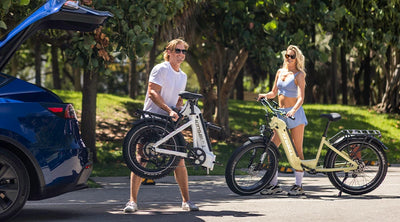









Kingbull Ranger vs. Mokwheel Basalt 2.0: Two Different Takes on the Fat Tire E-Bike

When an e-bike needs to handle more than smooth pavement, fat tires, suspension, motor power, and battery capacity can all make a difference. But not every fat tire e-bike is designed around the same riding experience.
The Kingbull Ranger and Mokwheel Basalt 2.0 are two examples of this. Both combine 750W motors, 4-inch fat tires, front suspension, hydraulic disc brakes, and speeds of up to 28 MPH. But their designs take different approaches: the Ranger leans toward a vintage moped-inspired look and compact 20-inch fat tires, while the Basalt 2.0 follows a more traditional all-terrain fat e-bike setup with 26-inch wheels.
So, which style fits your riding? Here's a closer look.
Ranger vs. Basalt 2.0: At a Glance
| Feature | Kingbull Ranger | Mokwheel Basalt 2.0 |
|---|---|---|
| Motor | 750W | 750W |
| Peak Power | 1300W | 1100W |
| Torque | 85 Nm | 90+ Nm |
| Battery | 48V 18Ah / 864Wh | 48V 19.6Ah |
| Claimed Range | Up to 80 miles* | 60–80 miles* |
| Top Speed | Up to 28 MPH | Up to 28 MPH* |
| Tires | 20" × 4.0" | 26" × 4.0" |
| Suspension | Dual-crown hydraulic suspension, 80mm travel | 110mm adjustable front suspension |
| Brakes | Hydraulic disc brakes | Tektro hydraulic disc brakes |
| Payload | 350 lbs | 450 lbs |
| Weight | 88 lbs | 80 lbs |
| Drivetrain | Shimano 7-speed | Shimano 8-speed |
*Actual range varies with terrain, rider weight, speed, assist level, weather, and other riding conditions.

1. Different Designs, Different Riding Feel
The Kingbull Ranger takes a vintage moped-inspired approach. Its long seat, compact frame, rear rack, and 20 × 4.0" fat tires give it a distinctive look that stands apart from conventional electric mountain bikes. The frame is built around a 20-inch wheel setup, while the dual-crown suspension fork provides 80mm of travel.
The Mokwheel Basalt 2.0, meanwhile, follows a more traditional fat-tire e-bike design. Its 26" × 4.0" tires and 110mm adjustable front suspension are geared toward mixed-surface riding, from paved roads and gravel to grass and light trails. Mokwheel describes the Basalt 2.0 as an all-rounder for both everyday errands and weekend rides.
That makes the choice less about one universal design being better and more about what kind of ride you want.
Ranger: vintage styling, compact fat-tire setup, and a more distinctive moped-inspired profile.
Basalt 2.0: traditional fat-tire geometry, larger wheels, and a more conventional all-terrain setup.
2. 20-Inch vs. 26-Inch Fat Tires
Both bikes use 4-inch-wide fat tires, but their wheel sizes create an important difference.
The Ranger uses 20" × 4.0" tires, while the Basalt 2.0 uses 26" × 4.0" tires.
For riders who like the compact feel and styling of a moped-style e-bike, the Ranger's smaller wheel format fits naturally with its overall design.
The Basalt 2.0's 26" wheels give it the familiar appearance of a traditional fat-tire bike. Its wide tires are designed to provide traction and stability across pavement, gravel, grass, dirt, and light trails.
In either case, the 4-inch tire width is useful when a ride goes beyond perfectly smooth pavement.
3. Motor Power and Battery Capacity
Both models use a 750W motor, but the numbers behind them are slightly different.
The Ranger is rated at 750W with up to 1300W peak power and 85 Nm of torque. It pairs that motor with a 48V 18Ah, 864Wh battery, with a claimed range of up to 80 miles under ideal riding conditions.
The Basalt 2.0 uses a 750W motor with 1100W peak power and 90Nm+ of torque. Its 48V 19.6Ah battery provides a larger 940.8Wh capacity, and Mokwheel lists a 60–80-mile range.
In simple terms, the Ranger puts more emphasis on peak motor output, while the Basalt 2.0 offers a slightly larger battery and higher published torque figure.
For either bike, real-world range will depend heavily on how and where you ride. Higher speeds, hills, rough surfaces, heavier loads, and frequent acceleration can all reduce range compared with ideal-condition estimates.
4. Suspension and Off-Road Riding
Suspension is another area where the two bikes take slightly different approaches.
The Ranger uses a dual-crown hydraulic suspension fork with 80mm of travel, designed to help absorb bumps on uneven surfaces.
The Basalt 2.0 comes with a 110mm adjustable front suspension fork. Mokwheel specifically positions the suspension for bumps encountered on gravel, uneven paths, and grass edges.
For riders regularly moving between pavement and light trails, both setups provide an alternative to a rigid fat-tire bike. Riders planning more demanding off-road routes should also consider the terrain, tire pressure, rider weight, and overall riding conditions rather than looking at suspension travel alone.
5. Cargo and Everyday Utility
Both bikes can work beyond recreational riding, but their published load ratings differ.
The Ranger has a 350 lb maximum payload and a 150 lb rear rack load limit. Its seat incorporates the rear rack into the overall design, making cargo carrying part of the bike's practical setup.
The Basalt 2.0 has a higher 450 lb total payload capacity and comes with a rear rack included.
For riders who regularly carry heavier combined loads, the Basalt 2.0's higher payload rating is worth considering. For riders who want a vintage moped-style e-bike with built-in cargo capability, the Ranger offers a different take on everyday utility.

6. Which Fat Tire E-Bike Fits Your Ride?
The Ranger and Basalt 2.0 share many of the fundamentals of a modern fat-tire e-bike, but they are aimed at somewhat different riding preferences.
The Kingbull Ranger may fit you if you want:
- A vintage moped-inspired e-bike design
- 20"× 4.0" fat tires
- Up to 1300W peak motor output
- An 864Wh battery
- Up to 28 MPH
- A built-in rear rack with a 150 lb load limit
- A distinctive bike for both everyday rides and off-road adventures
You can explore the Kingbull Ranger for the full specifications and current pricing.
Final Thoughts
The Kingbull Ranger and Mokwheel Basalt 2.0 approach the fat-tire e-bike category from two different directions.
The Ranger combines a vintage moped-style frame, 20"× 4.0" fat tires, 1300W peak power, and an 864Wh battery for riders looking for a distinctive all-terrain ride. The Basalt 2.0 takes a more traditional route with 26"× 4.0" tires, a 19.6Ah battery, 110mm front suspension, and a 450 lb payload rating.
Neither approach is designed for exactly the same rider. If your priority is a distinctive moped-inspired design and compact fat-tire setup, the Ranger offers one direction. If you prefer a conventional 26-inch fat-tire platform with a higher published payload capacity, the Basalt 2.0 offers another.
The right choice ultimately comes down to how you plan to ride, what kind of terrain you expect to encounter, and which bike fits your preferred riding style.


Leave a comment