












Ebike ComparisonPurchase Guide
Kingbull Rover (Now 2.0!) vs. Rad Power RadRover 6 Plus: The Ultimate Off-Road E-Bike Showdown
In the vast realm of electric bicycles, the powerful off-road models, Kingbull Rover 2.0 and Rad Power RadRover 6 Plus, have garnered significant attention. This article delves into a thorough comparison of these two remarkable off-road electric bikes, unveiling their differences in performance, design, and adaptability to various terrains. With the recent upgrade to the Rover 2.0, Kingbull has set a new standard for full suspension ebikes. Which one is better suited for your adventurous needs? Let's explore this showdown.
Performance Overview
Model
Kingbull Rover 2.0
RadRover 6 Plus
Motor
48V 750W Customized BAFANG Hub Motor (1300W Peak Power)
750W Brushless Geared Hub Motor
Battery
48V 15 Ah Samsung Lithium Battery Certificated by UL 2271
48V 14Ah Lithium Battery
Speed
Up to 28 mph
Up to 20 mph
Range
Up to 60 miles
25-45 miles per charge (estimate)
Pedal Assist
5 Levels
5 Levels
Brakes
ZOOM 2 Pistons Hydraulic Brakes
Hydraulic
Throttle
Half Twist
Half twist
Sensor
High-Precision Torque Sensor
Cadence Sensor
Gears
Shimano 7-Speed
Shimano 7-Speed
Weight
80 lbs
73.4lbs
Payload Capacity
400 lbs
275 lbs
Frame
6061 Aluminum Alloy with Internal Battery, Full Suspension
6061 Aluminum Alloy with semi-integrated battery
Wheels
26″ x 4″ CST Fat Tires
Kenda Juggernaut 26" x 4"
Soft-tail
Yes
No
Lights
Front: 48V LED Front Headlight
Rear: Integrated taillight with brake light
Front: Standard Rad Power Bikes LED headlight
Rear: Integrated taillight with brake light
Display
4.0" LCD Colorful Screen with USB
2 LCD Displays
Step-Over
Yes
Yes
Price
$1,099.00
$2,099.00
Motor & Battery
The Kingbull Rover 2.0 and RadRover electric bikes both feature a 48V 750W brushless rear hub motor. This powerful 750W motor not only provides ample power but also offers riders a range of significant advantages. Firstly, the 750W output power allows both these bikes to excel in off-road environments, effortlessly tackling various terrains and complex road conditions, delivering robust and stable power support. For the Rover 2.0, this is further enhanced by a customized Bafang motor that delivers superior torque for steep climbs.
Importantly, in accordance with the regulations of the U.S. electric bike laws, the 750W motor operates within legal standards, ensuring a safe and compliant riding experience for users. This means riders can fully enjoy the potent electric assistance without concerns about regulatory restrictions. This compliance makes the Rover 2.0 and RadRover ideal choices for diverse environments and requirements, providing riders with greater freedom and flexibility.
The electric bikes Rover 2.0 and RadRover are equipped with 48V 15Ah Samsung lithium batteries and 48V 14Ah lithium batteries, respectively. Both of these battery capacities are sufficient to meet the demands of daily commuting. However, the Kingbull Rover 2.0 features UL 2271 certified Samsung cells, providing a safer and more reliable power source. The larger battery capacity of the Rover makes it an ideal choice for long-distance rides, catering to riders seeking higher speeds and more powerful assistance. This means that in situations requiring extended travel or greater power reserves, the Rover's battery capacity is better suited. Therefore, if you are a rider pursuing long-distance journeys or a higher-speed experience, the Rover's larger battery capacity may better meet your needs.
Speed & Range
In terms of maximum speed, Rover 2.0 and RadRover present significant differences. Rover 2.0 has a top speed of 28 mph (Class 3), while RadRover has a top speed of 20 mph. This means that Rover offers higher performance in terms of speed compared to RadRover.
Rover's top speed of 28 mph provides riders seeking a faster-paced experience with greater flexibility. This is a notable advantage for users who pursue high-speed riding and the quick coverage of distances, especially in urban commuting or situations where a shorter travel time is desired.
On the other hand, RadRover's top speed of 20 mph is suitable for riders who prioritize comfort and stability. This speed is sufficient for general riding needs, particularly in urban environments. For users who lean towards relaxed riding, enjoy the scenery, or seek a more controlled riding experience, RadRover's speed offers a smooth and comfortable riding experience.
Rover 2.0 boasts a maximum range of 60 miles, while RadRover offers a maximum range of 45 miles. Undoubtedly, due to Rover's larger battery capacity and optimized power system, it outperforms RadRover in terms of riding range. Providing riders with a longer distance, it is suitable for those seeking long-distance adventures or daily commuting over expansive areas, making it an ideal choice for users with such preferences. Although RadRover has a range of 25-45 miles, it still meets general riding needs. This is suitable for urban commuting or short-distance rides in the surrounding environment. While RadRover's range may be relatively shorter, its versatility lies in providing a comfortable riding experience for everyday use.
Brakes
The Rover 2.0 and RadRover electric bicycles are both equipped with hydraulic brake systems, bringing forth a range of significant advantages compared to traditional mechanical brakes.
Firstly, hydraulic brakes surpass mechanical brakes in braking performance. The hydraulic brake system transmits force through fluid, providing more precise and reliable braking effects. This design enables riders to easily achieve accurate brake control, ensuring prompt stops when needed. In contrast, mechanical brakes may exhibit less stable braking performance due to factors like friction and cable expansion.
Secondly, hydraulic brakes maintain consistent performance in various weather conditions. Compared to mechanical brakes that may be affected by rainwater or mud, hydraulic brakes offer greater stability, ensuring reliable braking effects in different environments. This advantage makes hydraulic brakes particularly beneficial in unpredictable outdoor conditions.
Additionally, hydraulic brakes typically require less manual operating force, allowing riders to brake more effortlessly. This enhanced responsiveness and reduced hand fatigue make hydraulic brakes excel in long-distance rides or challenging terrains. Overall, hydraulic brakes outperform traditional mechanical brake systems in both performance and user experience.
Throttle
Rover 2.0 and RadRover, two electric bikes designed for off-road adventures, both feature the Half Twist throttle. This design holds significant advantages in the realm of off-road electric bicycles. The Half Twist throttle allows riders to finely adjust the level of electric assistance, providing a more flexible and responsive control experience.
The operating mechanism of the Half Twist throttle permits riders to precisely control the intensity of electric assistance by making subtle adjustments to the position of their fingers. This nuanced control capability makes it easier for riders to navigate diverse terrains and challenges in complex off-road environments, delivering a more detailed and personalized riding experience.
Furthermore, the design of the Half Twist throttle enables riders to react quickly and adapt to ever-changing off-road conditions. With simple adjustments within the Half Twist range, riders can instantly receive responsive electric assistance, facilitating smoother traversals through mountainous terrain, trails, or other challenging landscapes.
In summary, the utilization of the Half Twist throttle in both Rover 2.0 and RadRover enhances the precision of control and adaptability in off-road environments, providing riders with a more flexible and personalized riding experience. The intuitive control mechanism adds to the joy of riding, while simultaneously improving overall handling performance, making it easier for riders to adapt to various riding conditions.
Sensor
The Kingbull Rover 2.0 features an upgraded high-precision torque sensor, while the RadRover electric bicycle features a cadence sensor. Both adjust the level of electric assistance by monitoring the rider's input. However, the torque sensor on the Rover 2.0 measures the actual force applied to the pedals, providing an instantaneous and natural power boost.
This design ensures a smoother response of electric assistance, delivering a more natural riding experience. Riders won't need to exert excessive effort during cycling, as the system automatically adjusts assistance based on the frequency of pedal cadence (or pressure for the Rover 2.0), resulting in smoother acceleration and deceleration. This proves particularly beneficial for long-distance rides and urban commuting. The simplicity and reliability of its design provide riders with a more relaxed and natural electric assistance experience.
Weight & Payload Capacity
Rover 2.0 and RadRover exhibit some noticeable differences. Rover 2.0 has a total weight of 80 lbs, with a maximum payload capacity of 400 lbs. In comparison, RadRover is lighter, weighing 73.4 lbs, and has a maximum payload capacity of 275 lbs.
This difference may be influenced by several factors, with one major factor possibly being the design and materials of the frame. Such a design allows Rover 2.0 to be more stable and reliable when carrying heavier loads or passengers.
Frame
Kingbull Rover 2.0 and RadRover both feature robust and durable 6061 aluminum alloy frames, highlighting their advantages in lightweight construction and strength. However, they differ in battery layout, with Rover 2.0 adopting an integrated battery design and RadRover opting for a semi-integrated battery.
Rover's integrated battery design seamlessly incorporates the battery into the frame, creating a sleek and stylish appearance. This design not only enhances the overall aesthetics of the bike but also provides better protection for the battery, reducing the risk of damage. The integrated battery layout also helps maintain the traditional look of bicycles, offering users a more discreet and integrated battery solution. In contrast, RadRover's semi-integrated battery design slightly protrudes externally, providing users with easier access for maintenance and battery replacement. This design also, to some extent, reduces the complexity of the frame, making battery maintenance more intuitive. The choice between the two designs depends on users' preferences for appearance and battery usability.
Wheels
The Rover 2.0 and RadRover 6 Plus both feature wide off-road tires, specifically the 26" x 4.0" CST puncture-proof fat tires and the Kenda Juggernaut 26" x 4.0", respectively. Firstly, the Rover 2.0 is equipped with CST tires. This fat tire design offers a larger contact area and better floatation, providing excellent traction across various terrains. CST is a well-known tire manufacturer, recognized for durability and reliability, delivering robust performance for riders.
In contrast, the RadRover 6 Plus opts for the Kenda Juggernaut 26-inch x 4-inch tires. Kenda, a leading brand in the tire industry, has gained praise for the Juggernaut series, known for outstanding grip and maneuverability. This tire design aims to deliver superior performance in diverse terrains, offering riders increased stability and control. Both tire selections emphasize providing excellent performance in off-road and challenging terrains. Overall, these two wheel options contribute to the reliable performance of these off-road electric bikes.
Soft-tail & Full Suspension
The Kingbull Rover 2.0 has been upgraded to a full suspension electric bike system, featuring a superior soft-tail design. Traditionally, soft tail designs are more commonly found in mountain bikes, aiming to provide a more comfortable riding experience. Rover 2.0, by incorporating a DNM adjustable rear shock, combines the advantages of traditional bicycles to offer riders a smoother and more comfortable riding sensation.
The traditional soft tail design in bicycles effectively reduces the transmission of vibrations and bumps to the rider, thereby enhancing the overall riding comfort. In electric bikes like the Rover 2.0, the full suspension also provides better traction, mitigating the impact of uneven terrain or rough surfaces on the rider's body.
Drawing inspiration from traditional bicycle design principles, Rover 2.0, through the use of a soft tail, creates a more comfortable riding experience for cyclists. This design not only sets Rover 2.0 apart in the electric bike market but also underscores a commitment to rider comfort. For those seeking a smoother and more enjoyable riding experience, the introduction of a full suspension system undoubtedly represents a massive advantage for Rover.
Price
In terms of performance, the Rover 2.0 is not inferior to the RadRover; both have strong capabilities and features in the electric bike market. However, in terms of price, the Rover 2.0 stands out as a far more cost-effective option. Priced at only $1,099.00 (Sale price), the Rover 2.0 is notably more affordable compared to the RadRover, which is priced at $2,099.00.
This means that, despite the Rover's performance being superior to the RadRover in many categories, its cost-effectiveness makes it the ideal choice for users seeking an outstanding riding experience. Whether in motor performance, battery life, or other key aspects, the Rover 2.0 can meet the demands for a high-performance electric bike and is presented to riders at a much more budget-friendly price.
Conclusion
Taking a comprehensive view, both the Kingbull Rover 2.0 and RadRover 6 Plus showcase unique features in the electric bike market. Whether it's the powerful 750W motor, compliant electric assist system, superior braking performance, flexible throttle design, or the newly upgraded full suspension system and all-terrain tires, each aspect caters to the diverse needs of riders.
The Kingbull Rover 2.0 stands out with a larger battery capacity, higher maximum speed, and a more intuitive torque sensor, catering to users seeking high performance and long-distance rides. On the other hand, the RadRover, with its lighter design and comfortable speed, suits riders looking for leisure and stability. In the end, regardless of the choice, both bikes offer companionship for rides, but the Rover 2.0 provides an unbeatable combination of modern technology and value.
Read more
Ebike ComparisonPurchase Guide
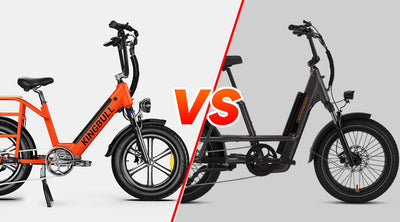
Kingbull Voyager vs. Rad Power RadRunner 3 Plus: Cargo E-Bike Showdown
In the ongoing revolution of urban transportation, cargo electric bikes have become integral in providing users with efficient and environmentally conscious solutions. This mode of transportation not only tackles urban congestion but also underscores the importance of sustainable development. In this article, we will delve into a comparative analysis between the Kingbull Voyager and Rad Power RadRunner 3 Plus, shedding light on these two cargo electric bikes by scrutinizing their design and performance aspects. The objective of this comparison is to empower readers with a comprehensive understanding, aiding them in making well-informed decisions to meet their daily commuting requirements.
Performance Overview
Voyager
RadRunner 3 Plus
Motor
750W
750W
Battery
48V 17.5AH
48V 14AH
Speed
28 MPH
25mph
Range
Up to 60 miles
Up to 45 miles
Pedal Assist
5 Levels
5 Levels
Brakes
Hydraulic
Hydraulic
Throttle
Thumb Throttle
Half twist throttle
Sensor
Speed
Torque
Gears
Shimano 7-Speed
Shimano 7-Speed
Weight
77 lbs
77 lbs
Payload Capacity
440 lbs
350 lbs
Frame
6061 Aluminum Alloy with Internal Battery
6061 Aluminum Alloy with semi-integrated battery
Wheels
20″ x 4″ CST fat tires
20″ x 3.3″ Kenda K905 tires
Light
48V LED Front Headlight,taillight with brake light
LED headlight, taillight with brake light
Price
$1,199
$2,099
By comparing the data in the table, we will conduct a thorough analysis and comparison of the two cargo electric bikes, the Kingbull Voyager and the Rad Power RadRunner 3 Plus. Through these comparisons, we will delve into their key features to assist prospective buyers in making informed decisions, ensuring that consumers choose the electric bike that best suits their needs.
Motor & Battery
Both electric bikes are equipped with powerful 750-watt motors, complying with the regulations of the U.S. electric bike laws to ensure the maximum power is safely achieved. In terms of battery capacity, the Kingbull Voyager stands out. The Voyager has a battery capacity of 48V 17.5Ah. In comparison, the official data for the Rad Power RadRunner 3 Plus indicates a battery capacity ranging from 589-672 Wh, approximately equivalent to 14Ah when converted. While this is still a considerable battery capacity, it may be slightly less than the Voyager's single battery capacity.
It's worth noting that the Kingbull Voyager also offers the option of a dual-battery setup, providing consumers seeking longer range with a more flexible choice. With the dual-battery configuration, the Voyager can achieve a range of up to 100 miles, offering greater convenience for users requiring an extended riding distance. This significant advantage in battery performance positions the Voyager as a suitable choice for riders who prioritize extended range capabilities.
Speed & Range
The Kingbull Voyager boasts a maximum speed of 28mph. According to the regulations of the U.S. bicycle laws, Voyager's speed meets legal standards in many regions and can even provide a higher speed within legal limits. It's essential to adjust the speed according to local bicycle regulations during rides to ensure safety and compliance.
In comparison, the Rad Power RadRunner 3 Plus has a maximum speed of 25mph. While it may not match the speed of the Voyager, considering safety factors, it remains a good choice in many areas.
Regarding the riding range, the Kingbull Voyager offers a maximum range of 60 miles, whereas the Rad Power RadRunner 3 Plus provides 45 miles. Due to the larger battery capacity of the Voyager, there is no doubt that the Voyager excels in the riding range, offering users a longer distance for their rides. This makes the Voyager a superior choice for those seeking longer journeys.
Brakes & Throttle
Voyager and Rad Power RadRunner 3 Plus both feature Hydraulic brakes, highlighting a shared commitment to advanced braking technology. Hydraulic brakes bring several advantages to the table. Firstly, they offer enhanced braking performance with precise control and modulation. The hydraulic system transmits force more efficiently, translating to quicker and more reliable stopping power.
Moreover, hydraulic brakes are known for their consistent performance in various weather conditions. Unlike mechanical brakes that may be affected by cable stretch or environmental factors, hydraulic systems provide reliable braking even in adverse situations, ensuring rider safety.
Additionally, hydraulic brakes typically require less manual effort to operate, contributing to a more comfortable riding experience. The system's responsiveness and reduced hand fatigue make it particularly advantageous during extended rides or in challenging terrains. Click here to learn more about the differences between mechanical brakes and hydraulic brakes.
The focus of comparison now shifts to the throttle systems, with Voyager opting for a thumb throttle, while Rad Power RadRunner 3 Plus employs a half twist throttle. These two designs largely depend on personal preference, and the following will outline the respective advantages of each throttle type.
The advantage of the thumb throttle lies in its convenience of operation. Positioned at the top of the handlebar, riders can easily control the throttle with their thumb without adjusting their grip on the handlebar. This design is particularly popular for long rides as it reduces hand fatigue, enhancing overall riding comfort.
In contrast, the half twist throttle design emphasizes finer control. Typically situated on the side of the handlebar, it controls the throttle by twisting a portion of the handlebar. This design allows riders to have more precise control over acceleration and speed adjustments, suitable for scenarios that demand more flexible control.
In summary, the thumb throttle emphasizes simplicity and comfort in operation, while the half twist throttle focuses on nuanced control, ideal for riders with higher demands for speed adjustments. The choice between these throttle types will depend on individual riding preferences and usage scenarios.
Sensor
Voyager utilizes a speed sensor, while RadRunner 3 Plus employs a torque sensor. The choice between these two designs largely depends on personal preference. The following will outline the advantages of each sensor type.
The advantage of a speed sensor lies in providing riders with a smoother and more natural riding experience. This sensor adjusts the electric bike's power output by monitoring the rider's pedal speed, achieving smoother acceleration and deceleration processes. For riders who appreciate the feel of traditional bicycle riding, the speed sensor offers a more intuitive power control.
In contrast, a torque sensor places more emphasis on the rider's force and exertion. By sensing the rider's pedal force, the torque sensor can more accurately adjust the electric bike's assistance level, achieving a power output that better aligns with the rider's needs. This design is suitable for riders seeking more precise and personalized assistance.
In summary, a speed sensor provides a smooth and intuitive riding experience, while a torque sensor focuses on more precise and personalized force control. The choice between these sensor types will depend on individual riding habits and preferences.
Weight & Payload Capacity
Voyager and RadRunner 3 Plus share the same weight, both weighing in at 77lbs. However, in terms of payload capacity, Voyager has a significant advantage. With a payload capacity of 440lbs, Voyager exceeds Rad Power RadRunner 3 Plus, which supports up to 350lbs. Note: The rear seat of Voyager has a maximum weight capacity of 300lbs.
This difference in payload capacity can be attributed to the construction and design of the frames. Voyager's frame construction is optimized to handle a higher load, ensuring greater durability and stability. Therefore, for riders seeking an electric bike with a higher payload capacity, Voyager presents a more favorable option, providing added versatility and suitability for various cargo and rider configurations.
Frame
Voyager's frame is constructed with 6061 aluminum alloy and features an internal battery design, while RadRunner 3 Plus's frame also utilizes 6061 aluminum alloy with a semi-integrated battery. Although both use the same 6061 aluminum alloy material, the key difference lies in the battery layout.
The primary advantage of the internal battery design is its impact on aesthetics and overall integration. The battery is cleverly embedded within the frame, providing a sleeker appearance without compromising the traditional aesthetics of bicycles. Additionally, the internal battery design offers superior protection for the battery. Being located inside the frame, it is less susceptible to external environmental factors, such as rainwater and dust, compared to external batteries. This helps prolong the battery's lifespan and enhances the overall reliability of the bike in various weather and road conditions.
Voyager's frame adopts an unibody frame design with an elevated rear seat. The advantage of an unibody frame design lies in enhancing the overall stability of the bike. This structure creates a more robust and cohesive riding platform, helping to reduce vibrations and torsion, thereby improving the bike's stability. This is particularly beneficial for riding on various terrains, especially bumpy or uneven surfaces, as it better maintains the stability of the vehicle, providing a more reliable riding experience.
The elevated rear seat design brings additional advantages, primarily in two aspects. Firstly, this design reduces the likelihood of the electric bike tipping over. By raising the rear seat, the inclination angle of the vehicle is minimized, lowering the risk of tipping, especially at low speeds or during stationary moments. Secondly, the elevated rear seat contributes to better maintaining riding balance. This is crucial for maneuvering and overall control, making it easier for riders to handle the vehicle and enhancing the overall safety and comfort of the ride.
Price
Voyager is priced at $1199, while RadRunner 3 Plus is priced at $2099. Undoubtedly, in terms of cost-effectiveness, Voyager holds a clear advantage. Voyager not only leads in terms of pricing but also demonstrates excellent performance. Whether it's motor performance or range, Voyager delivers a satisfying level of capability.
Voyager's design is more user-centric, taking into consideration the needs and comfort of riders. This design focuses on details, enhancing the overall riding experience. In summary, Voyager not only competes strongly in terms of price but also provides riders with a more comprehensive choice in terms of performance and design.
Conclusion
Both Voyager and RadRunner 3 Plus exhibit distinct advantages, making them excellent choices. However, in terms of performance and cost-effectiveness, Voyager stands out. With a more budget-friendly price, Kingbull Voyager offers riders a comprehensive selection, catering to those seeking high performance as well as those prioritizing affordability. Therefore, if you are looking for an electric bike with outstanding performance and reasonable pricing, Voyager is undoubtedly a preferred choice worth considering.
Read more
Ebike ComparisonPurchase Guide
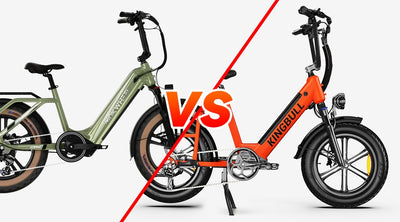
Electric Bikes Face-off: A Comparative Analysis of Cargo E-bike Kingbull Voyager vs. Mokwheel Scoria
In the current transformation of urban transportation, cargo electric bikes are playing an increasingly crucial role, providing users with efficient and eco-friendly solutions. This mode of transportation not only addresses urban congestion issues but also emphasizes sustainable development. In this article, we will compare the Kingbull Voyager and Mokwheel Scoria, offering readers a comprehensive understanding of these two cargo electric bikes by evaluating their design and performance. This comparison aims to assist readers in making a more informed choice for their daily commuting needs.
Performance Overview
Voyager
Scoria
Motor
750W
750W
Battery
48V 17.5AH
48V 19.6AH
Speed
28 MPH
25 MPH
Range
Up to 60 miles
60~80miles
Pedal Assist
5 Levels
5 Levels
Brakes
Hydraulic
Hydraulic
Throttle
Thumb Throttle
Thumb Throttle
Sensor
Speed
Torque
Gears
Shimano 7-Speed
Shimano 7-Speed
Weight
77 lbs
79 lbs
Payload Capacity
440 lbs
350 lbs
Frame
6061 Aluminum Alloy with Internal Battery
6061 Aluminum Alloy with Internal Battery
Wheels
20″ x 4″ CST fat tires
20x4.0" CHAOYANG ARISUN Fat Tire
Light
48V LED Front Headlight
Dual-Bulb Brilliance
Display
LCD Colorful Screen with USB
LED Integrated
Price
$1,199
$1,799.00
Next, based on the table contents, we will provide a detailed and comprehensive overview of the performance of the Voyager and Scoria electric bikes. By comparing these key performance indicators, we will delve into the strengths and features of these two electric bikes, offering insights into their performance aspects. This comparison aims to provide readers with a comprehensive perspective, aiding in a better understanding of their performance in various aspects. Such a comparison will offer you a well-rounded view, assisting you in gaining a more comprehensive understanding of these two electric bikes.
Motor & Battery
Both models are equipped with high-performance 750W motors, providing users with robust power support. The 750W motor not only handles various complex urban riding conditions but also ensures sufficient power during starts and climbs, enhancing the overall riding experience. Its excellent performance enables users to navigate through the city more easily and swiftly.
Regarding the battery, the Voyager is powered by a 48V 17.5Ah battery, while the Scoria comes with a 48V 19.6Ah battery. Both batteries represent outstanding endurance, meeting the demands of users for long-distance rides. The combination of a 750W motor and high-capacity battery not only delivers strong power output but also extends the overall range, allowing users to confidently plan extended journeys. Although the Voyager currently features a 48V 17.5Ah battery, we are continuously working to enhance product performance, and in the future, we will further increase battery capacity for even better endurance.
Speed
In terms of speed, the Voyager excels with a top speed reaching 28mph. This design not only satisfies riders' desire for high-speed cycling but also takes into consideration the maximum speed limits in some U.S. states, set at 28mph. The Voyager's design aligns closely with practical needs, allowing riders to effortlessly reach their desired speeds in various states. Of course, while emphasizing speed, we always prioritize safety, ensuring users enjoy outstanding safety assurance even during high-speed rides.
In comparison, the Scoria has a top speed of 25mph. Although still quite fast, it's undeniable that, compared to the Voyager's 28mph, it falls slightly short in speed. Nevertheless, the Scoria continues to provide a swift riding experience.
Range
Voyager and Scoria exhibit their respective unique features. Voyager, based on a single-battery configuration, achieves a riding range of over 60 miles, providing riders with reliable endurance. On the other hand, Scoria, with a larger battery capacity than Voyager, excels in endurance, boasting a riding range of 60 to 80 miles. However, Voyager possesses a unique advantage with its optional dual-battery system. By equipping the dual-battery setup, Voyager effortlessly extends its riding range to over 100 miles. Whether for daily commuting or long-distance rides, users can flexibly adjust based on individual needs, ensuring the optimal riding experience.
Brakes & Throttle
The braking systems of both Voyager and Scoria utilize hydraulic brake technology. Firstly, the hydraulic brake system offers a more responsive and precise response compared to traditional mechanical brake systems. It can transmit braking force in a shorter amount of time, thereby enhancing braking efficiency and safety. Additionally, the hydraulic brake system adapts well to the demands of high-speed driving and emergency braking, ensuring stability in various driving scenarios.
Both Voyager and Scoria feature a thumb throttle, in terms of throttle control, the thumb throttle design provides a more convenient and comfortable driving experience for the driver. Compared to traditional foot pedals, the thumb throttle allows the driver to adjust the throttle opening more naturally during driving without the need to shift foot positions, thereby improving maneuverability. This design is particularly practical for long drives and situations requiring frequent adjustment of vehicle speed, offering a more user-friendly driving experience for the driver.
Sensor
In the realm of sensors, the choice between the Voyager's speed sensor and the Scoria's torque sensor brings forth distinctive characteristics. The speed sensor utilized by the Voyager stands out on level terrains, where it facilitates rapid acceleration to the desired speed with minimal pedal exertion, ensuring a seamless and effortless riding experience. This feature proves advantageous for users who prioritize a smooth commute on even surfaces.
On the other hand, the torque sensor employed by the Scoria demands a more substantial pedal force to modulate the speed. However, it excels in scenarios that necessitate more vigorous and forceful pedaling efforts, such as climbing hills or accelerating from a standstill. The torque sensor's ability to finely tune the electric assistance based on the rider's applied force leads to a more responsive and personalized riding experience, particularly suitable for those seeking enhanced control and efficiency in varied riding conditions.
Weight & Payload Capacity
In the comparison of electric bikes, weight and load capacity are two crucial performance indicators. The Voyager weighs 77 pounds, providing users with a more agile and convenient riding experience. In contrast, the Scoria is slightly heavier, reaching 79 pounds. The Voyager excels in load capacity, supporting a remarkable 440-pound load, offering users enhanced carrying capability. While the Scoria has a load capacity of 400 pounds, it remains sufficient for most daily transportation needs.
Frame
Both the Voyager and Scoria electric bikes feature robust 6061 aluminum frame construction and an integrated battery design, seamlessly blending the battery into the overall frame to enhance structural integrity. This design not only ensures a more compact battery placement but also contributes to a sleeker overall appearance.
The Voyager boasts an upgraded rear-seat frame design and a unibody frame structure. This unique design significantly improves the bike's overall stability, reducing the risk of tipping, especially noticeable on flat surfaces or uphill rides. This distinctive design, particularly beneficial for scenarios requiring extra stability such as cargo transportation or carrying children, makes the Kingbull Voyager a more reliable and secure choice.
In contrast, the Scoria's frame and rear seat are designed separately. Compared to the integrated design of the Voyager, this separation may result in a slightly reduced overall stability. The disjointed frame structure might exhibit lower stability in certain riding scenarios, potentially leading to increased bike sway, particularly when dealing with additional loads or navigating complex terrains.
Wheels
The Voyager is equipped with a pair of 20″ x 4″ CST fat tires, while the Scoria features 20x4.0" CHAOYANG fat tires. Both bikes have opted for the same specifications of 20x4 fat tires, providing riders with enhanced traction and a more comfortable riding experience. The advantages of fat tires lie in their larger contact area and lower tire pressure, effectively mitigating vibrations and delivering a more stable riding sensation. Additionally, fat tires excel on uneven surfaces, offering riders improved maneuverability and traversability.
Although the Voyager and Scoria share the same tire specifications, the Voyager opts for CST tires, whereas the Scoria utilizes CHAOYANG tires. The Voyager tires features an unibody wheel design, this advanced design not only enhances the durability of the tire but also improves the overall performance of the e-bike. Moreover, the integrated wheel design contributes to providing more stable handling, allowing the Voyager to perform exceptionally well on various terrains. This innovative wheel design ensures a smoother, more reliable riding experience.
Light & Display
The Voyager electric bike showcases Kingbull's dedication to innovation and user experience in lighting and display. Firstly, the Voyager is equipped with a powerful pair of 48V LED front headlights. Compared to the headlights of other electric bikes on the market, their larger size provides a wider illumination range, offering riders a clearer and brighter vision. This design not only enhances safety during nighttime rides but also helps users adapt to various road conditions.
In terms of instrumentation, the Voyager features a colorful LCD screen with a built-in USB charging port. This full-color screen design not only enriches the display of vehicle information but also increases interaction between the user and the bike. Additionally, the built-in USB charging port provides a convenient mobile charging function for riders, especially during outdoor activities, addressing the issue of low phone battery and ensuring communication tools always have ample power.
In comparison, the Scoria is equipped with Dual-Bulb Brilliance front headlights and an LED Integrated dashboard. Their front headlights appear relatively small, potentially indicating a limited illumination range. However, the dual-bulb design might add a bright spot to their headlights in terms of brightness.
Price
The Voyager is currently priced at $1,799, while the Scoria comes in at $2,299. It's essential to note that these prices represent the regular retail prices. It's worth keeping an eye out for potential discounts or special offers, particularly during holidays or promotional periods.
Conclusion
Whether it's the Voyager or Scoria, both showcase exceptional design and performance. Each bicycle has its unique highlights, meticulously crafted from design aesthetics to actual functionality. Whether embarking on a long journey, utilizing it for practical purposes, or daily commuting, Kingbull Voyager promises an unparalleled riding experience. Kingbull is dedicated to seamlessly integrating electric bicycles into people's daily lives and work, shaping a new lifestyle that prioritizes convenience, efficiency, and environmental consciousness.
LED集成
Read more
Ebike ComparisonPurchase Guide
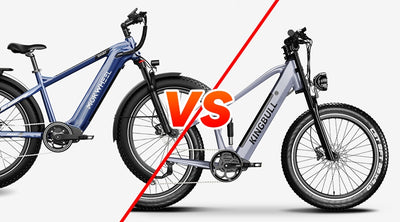
Kingbull Rover vs. Mokwheel Basalt: Unleashing the Power of Off-Road Electric Bikes
In the realm of adventure electric bicycles, selecting a model that suits your needs can be as challenging as embarking on an expedition. The market is flooded with electric bikes that emphasize off-road capabilities and the spirit of adventure, and among them, Kingbull and Mokwheel each showcase their unique features. In this article, we will conduct a comprehensive comparison of these two off-road electric bikes, aiming to provide you with a clearer guide for making an informed choice. Whether you're venturing into mountainous terrains or navigating urban adventures, understanding the strengths of Kingbull and Mokwheel will aid you in deciding which model aligns better with your adventurous requirements. Let's delve into the adventure journey of these two electric bikes, exploring their performance in various aspects.
Performance Overview
Rover
Basalt
Battery
48V 17.5Ah Lithium Battery
Samsung 48V 19.6Ah
Motor
48V 750W Brushless Rear Hub
48V 750W Brushless Rear Hub
Speed
Up to 28 mph on Level 5 PAS
Up to 28 mph on Level 5 PAS
Range
Up to 60 miles
60-80 Miles
Pedal Assist
5 Levels
5 Levels
Brakes
Hydraulic
Hydraulic
Throttle
Half Twist
Thumb
Sensor
Speed
Torque
Gears
Shimano 7-Speed
Shimano 7-Speed
Weight
77 lbs
79 lbs
Payload Capacity
440 lbs
400 lbs
Frame
6061 Aluminum Alloy with Internal Battery
6061 Aluminum Alloy with Internal Battery
Wheels
26″ x 4″ CST Fat Tires
26''x4.0" CHAOYANG Fat Tire
Soft-tail
Yes
No
Light
48V LED Front Headlight
Dual-Bulb Brilliance
Display
LCD Colorful Screen with USB
LED Integrated
Price
$1,199.00
$1,899.00
Next, we will delve into a detailed comparison of the key features between the Kingbull and Mokwheel electric bikes, as outlined in the table. By thoroughly exploring their performance and functionalities across various aspects, our aim is to provide you with a comprehensive understanding.
Battery
The Rover model is equipped with a high-performance 48V 17.5Ah lithium-ion battery. Although the battery does not utilize a well-known brand, we insist on selecting high-quality battery cells and employing advanced manufacturing processes. This ensures that the Rover's battery not only delivers long-lasting range but also excels in terms of lifespan and stability.
On the other hand, the Basalt model features a 48V 19.6Ah battery from Samsung. The choice of this Samsung battery ensures Basalt's impressive capabilities in terms of range.
Whether it's the Rover or the Basalt, we strive to optimize every detail, ensuring that when users choose a Kingbull electric bike, they receive not only outstanding battery performance but also a comprehensively upgraded riding experience.
Motor
Both the Rover and Basalt electric bikes are equipped with a powerful 48V 750W brushless rear hub motor, in compliance with the electric bike regulations of the United States. The U.S. electric bike regulations stipulate a maximum motor power of 750W, and this design not only meets regulatory standards but also provides riders with excellent power support. Kingbull adheres to the principles of compliance and legality, ensuring users receive outstanding motor power that aligns with local regulations.
Notably, both models opt for a rear hub motor. Rear hub motors offer several notable advantages, with one being a smoother and quieter riding experience. As the motor is integrated into the rear wheel, it eliminates friction and noise from traditional chain and gear systems, resulting in a more tranquil and stable riding experience.
Speed & Range
The Kingbull Rover and Mokwheel Basalt electric bikes both exhibit outstanding performance, especially in terms of top speed and range. Both models can achieve a top speed of 28 miles per hour. We deeply understand the varying regulations across different states in the United States regarding the speed of electric bikes. Therefore, Kingbull insists on providing a top speed of 28 mph to ensure compliance with standards in all states, allowing users to enjoy fast and efficient rides anywhere.
In terms of range, the Rover boasts a maximum range of up to 60 miles, while the Basalt offers an extended range of 60 to 80 miles. This means that whether it's daily commuting or weekend adventures, both the Rover and Basalt can meet users' needs for longer rides, providing riders with more flexible and extensive travel options.
Brakes
Kingbull Rover and Mokwheel Basalt are both equipped with advanced hydraulic brake systems. This system demonstrates outstanding performance in braking, providing riders with excellent control to ensure speed management and safe stopping during rides. It not only delivers powerful braking force but also shows significant improvements in response speed and sensitivity. This allows riders to precisely manage their speed, easily adapting to different road conditions and riding environments, ensuring reliable safety performance.
Compared to traditional brake systems, hydraulic brake systems exhibit exceptional stability and durability, reducing maintenance frequency and enhancing the overall riding experience. Whether in high-speed riding or emergency braking situations, these brake systems can deliver robust braking effects, ensuring riders maintain control over their rides safely and comfortably in any scenario.
Throttle & Sensor
Rover and Basalt showcase distinctly different designs in terms of throttle control. Rover utilizes a Half Twist throttle design, offering off-road riders a more convenient and intuitive operating experience. Particularly in off-road environments, the Half Twist design allows riders to make throttle adjustments more effortlessly and quickly, enhancing maneuverability and response speed. For riders seeking a more exhilarating off-road experience, this design better caters to their need for precise control.
In contrast, Mokwheel's Basalt opts for a Thumb throttle. While this design may be more common in some scenarios, in off-road riding, the Half Twist design aligns better with the rider's need for swift adjustments. The Thumb throttle may require more time and effort to make corresponding adjustments, and comparatively, its maneuverability in off-road conditions may be somewhat limited.
In terms of sensors, the Rover employs a speed sensor, while the Basalt opts for a torque sensor. The speed sensor demonstrates clear advantages on flat surfaces, allowing the rider to quickly reach the target speed with minimal pedal effort, providing a smooth riding experience. In contrast, the torque sensor requires greater pedal force to adjust the speed, but excels in situations that demand more forceful pedaling.
Weight & Payload Capacity
The Rover and Basalt electric bikes excel in their designs concerning weight and load-bearing capacity, providing users with a stable riding experience. The Rover's lightweight design, weighing only 77 pounds, enhances its maneuverability and agility. In comparison, the Basalt, slightly heavier at 79 pounds, still maintains reasonable weight, ensuring overall stability.
In terms of load-bearing capacity, the Rover demonstrates outstanding performance, supporting weights of up to 440 pounds. This means users can not only carry necessary items but also easily share enjoyable riding moments with others. In contrast, the Basalt has a load-bearing capacity of 400 pounds, slightly lower than the Rover but still sufficient for daily riding and carrying items.
Both models showcase robust load-bearing capabilities, providing users with more choices and convenience. Kingbull electric bikes are dedicated to delivering excellent performance in all aspects, meeting users' expectations for diverse travel needs.
Frame & Wheels
Both models feature robust and durable 6061 aluminum alloy frames with integrated battery systems. This design not only enhances the overall sleekness of the appearance but also provides better stability and ruggedness to the electric bikes, ensuring excellent performance in various riding conditions.
Regarding the tires, both the Rover and Basalt adopt a 26*4 fat tire design, offering riders a smoother and more comfortable riding experience. Fat tires have a larger contact area, providing better stability and easy adaptability to various terrains. Additionally, fat tires offer improved shock absorption, delivering a more comfortable riding experience on uneven surfaces. Rover utilizes CST tires, a well-known brand recognized for careful development in tread design and rubber material, offering riders excellent grip and durability. Basalt, on the other hand, opts for Chaoyang tires, known for their high-quality manufacturing processes and outstanding performance, providing reliable tire support for the Basalt model.
Soft-tail
One of the standout features of the Rover electric bike is its distinctive soft-tail design, a relatively rare characteristic among off-road electric bicycles. The soft-tail design proves to be particularly prominent in off-road riding, effectively mitigating bumps and vibrations to provide riders with a smoother and more comfortable cycling experience. In comparison to electric bikes from other brands, Rover, through the clever design of its soft-tail system, delivers superior suspension effects for riders on uneven terrains, instilling confidence to tackle various challenges.
The advantages of the soft-tail system extend beyond comfort; it also contributes to enhanced stability and maneuverability of the vehicle. On steep slopes and rugged mountain trails, the soft-tail system plays a crucial role, allowing riders to better control the bike, maintaining a stable and agile handling.
Light & Display
The Rover electric bike showcases Kingbull's dedication to innovation and user experience in lighting and display. Firstly, the Rover is equipped with a powerful pair of 48V LED front headlights. Compared to the headlights of other electric bikes on the market, their larger size provides a wider illumination range, offering riders a clearer and brighter vision. This design not only enhances safety during nighttime rides but also helps users adapt to various road conditions.
In terms of instrumentation, the Rover features a colorful LCD screen with a built-in USB charging port. This full-color screen design not only enriches the display of vehicle information but also increases interaction between the user and the bike. Additionally, the built-in USB charging port provides a convenient mobile charging function for riders, especially during outdoor activities, addressing the issue of low phone battery and ensuring communication tools always have ample power.
In comparison, the Basalt is equipped with Dual-Bulb Brilliance front headlights and an LED Integrated dashboard. While these are commendable designs, Rover's innovative approach to lighting and display further emphasizes Kingbull's commitment to user needs and safety.
Price
In terms of pricing, Kingbull demonstrates exceptional value for its electric bicycles. The Rover is priced at only $1699, while the Basalt is listed at $2199. This undoubtedly makes the Rover a more affordable option, providing riders with an economical choice for a high-performance electric bike. It's worth noting that during specific promotional periods, the prices of both models are further reduced. This means that users not only get outstanding performance and quality with Kingbull electric bikes but also have the opportunity to enjoy even more budget-friendly prices during promotional events.
Read more
Ebike ComparisonPurchase Guide
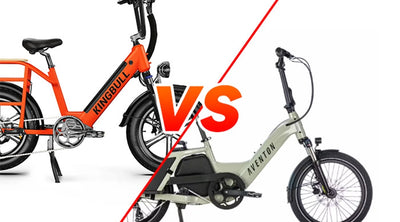
Kingbull Voyager VS Aventon Abound: Which One Is The Best?
When it comes to urban commuting and cargo transportation, e-bikes have become a popular choice. They are renowned for their environmental friendliness and convenience, providing city residents with a more sustainable mode of transportation. In this category, Cargo electric bikes stand out as a solution designed for transporting goods and small cargo, and they are increasingly common on city streets. However, the market offers a variety of Cargo electric bike brands and models, each with its unique features and functions.In this article, we will focus on comparing Kingbull Voyager and Aventon Abound. We will delve into their performance, design, pricing, and other key aspects to assist you in finding the electric bike that best suits your needs among the myriad of choices. Whether you are a city dweller, a business operator, or someone in search of a reliable transportation solution, this article will provide you with comprehensive information about these two electric bikes so that you can make an informed decision.
Performance Overview
Kingbull Voyager
Aventon Abound
Battery
48V 17.5Ah lithium battery
48V 17.5Ah lithium battery
48V, 15Ah LG Cells
Motor
750W
750W
Frame
6061 Aluminum frame with integrated battery design
Double-Butted Aluminum Alloy
Weight
77 lbs
81 lbs
Payload Capacity
440 lbs
440 lbs
Wheels
20″ x 4″ CST fat tires
20 x 2.4
Brakes
180mm hydraulic disc brakes
Hydraulic
Pedal Assist
5 Levels
4 Levels
Gears
7-speed
7-speed
Sensor
Speed
Torque
Throttle
Thumb Throttle
Thumb Throttle
Top Speed
28 MPH
20 MPH
Range
Up to 100 miles(Dual battery)
Up to 50 Miles
Step-Through
Yes
Yes
Lights
Integrated front and rear lights with turn signal functionality
Integrated front and rear lights with turn signal functionality
Display
LCD Colorful screen with USB
LCD Smart "Easy Read"
Price
$1,199
$1,999
we will delve into a detailed comparison of these key specifications to uncover how even minor differences in factors such as the motor and gears can interact to create distinct riding experiences. These subtle variations can have a significant impact on your daily commuting and cargo transportation, so let's explore these intricacies together to assist you in making an informed choice.
Battery
The Kingbull Voyager features a single 48V 17.5Ah lithium battery and offers the advantage of a higher battery capacity compared to the Aventon Abound. On the other hand, the Aventon Abound uses 48V, 15Ah LG Cells, which are known for their reliability. If you're looking for an extended riding experience, This higher battery capacity on the Kingbull Voyager not only ensures a longer riding range but also offers the flexibility to extend your rides even further. For those who desire an exceptionally enduring and uninterrupted riding experience, Kingbull Voyager presents the option to complement its already impressive battery with an additional 48V 17.5Ah lithium battery. This means that you can significantly extend your journey and maximize your time on the road, making it an excellent choice for those who require extended riding durations or have heavy cargo to transport.
Motor
Both the Kingbull Voyager and the Aventon Abound are equipped with robust 750W rear hub motors that provide ample power and support for your rides. These motors, operating at 48V, excel in providing strong and reliable assistance, even on challenging terrains and rough roads. With their 750W power, you can expect an efficient and powerful riding experience, ensuring you have the support you need when it matters most.
Frame
The Kingbull Voyager features a robust frame crafted from durable 6061 aluminum material. What sets it apart is its integrated battery design, seamlessly blending the battery into the frame. This not only enhances the structural integrity but also adds to its aesthetic appeal. Moreover, the Voyager incorporates an elevated rear-seat frame design and unibody techniques, a clever feature that elevated rear-seat frame design significantly enhances the overall stability of the bike. This design minimizes the risk of tipping, especially during rides on flat surfaces or uphill climbs. These attributes make the Kingbull Voyager a more reliable and secure choice, particularly well-suited for scenarios that demand added stability, such as cargo transportation or transporting children. The unibody design is a rare and unique feature in the market. This distinctive construction not only enhances the overall sleekness of the bike's appearance but also delivers a more stable riding experience for cyclists. The innovative design seamlessly integrates various components, improving the structural strength of the entire bike and providing riders with outstanding maneuverability.On the other hand, the Aventon Abound employs a double-butted aluminum alloy for its frame, providing a solid structure with excellent durability. However, it should be noted that the Abound's frame design falls slightly short in terms of an elevated rear-seat frame, which may require extra caution when carrying cargo or passengers to maintain stability. Although its frame design leans toward a more traditional approach, the Aventon Abound remains an outstanding electric bike option.
Weight & Payload Capacity
When comparing the weight and payload capacity of the Kingbull Voyager and the Aventon Abound, it's evident that there is minimal difference between the two. The Kingbull Voyager weighs 77 lbs, while the Aventon Abound is slightly heavier at 81 lbs. In terms of payload capacity, the Kingbull Voyager can carry up to 440 lbs, while the Aventon Abound can handle 440 lbs too. This slight variance in weight and payload capacity is unlikely to significantly impact the overall riding experience. Both electric bikes offer impressive load-bearing capabilities, making them well-suited for various applications.
Wheels
Comparing the tires of Kingbull Voyager and Aventon Abound electric bikes, it's evident that there are significant differences between them. Kingbull Voyager is equipped with 20″ x 4″ CST fat tires, while Aventon Abound utilizes 20" x 2.4" Puncture-Resistant tires.Kingbull Voyager's CST fat tire design is aimed at providing a larger contact area and better traction, especially suitable for various road conditions, including rough, uneven surfaces, and adverse weather conditions. These tires not only offer excellent traction but also provide greater stability, making them highly suitable for transporting cargo or riding on challenging road conditions. The Voyager tires features an unibody wheel design, this advanced design not only enhances the durability of the tire but also improves the overall performance of the e-bike. Moreover, the integrated wheel design contributes to providing more stable handling, allowing the Voyager to perform exceptionally well on various terrains. This innovative wheel design ensures a smoother, more reliable riding experience.
Aventon Abound's 20" x 2.4" Puncture-Resistant tires prioritize smoothness and puncture resistance. These tires have lower rolling resistance and incorporate puncture-resistant features to reduce the risk of tire pressure loss due to punctures. While they may not excel in traction as much as Kingbull Voyager, these puncture-resistant tires offer reliable performance for urban riding and long-distance journeys.
Brakes
Both Voyager and Abound feature advanced hydraulic brake systems, which excel in braking performance, providing riders with exceptional control to ensure speed management and safe stops during rides.
Sensor & Throttle
Voyager utilizes a speed sensor, which provides assistance by detecting the rider's pedaling motion. This sensor delivers a smooth and natural riding experience, allowing you to start your journey with ease and gradually feel the electric assistance kicking in. The sensor's quick response makes riding smarter and more adaptive, making it well-suited for various scenarios, whether you're carrying children or transporting cargo, ensuring a stable riding experience.Abound employs a torque sensor, offering assistance based on the force exerted by the rider. This allows for customizable adjustments to the riding intensity, catering to individual preferences and adapting to different terrains. The torque sensor provides riders with the flexibility to fine-tune their riding experience.Additionally, both Voyager and Abound feature thumb throttles, providing a convenient way to engage the motor when needed, enhancing the ease of riding. This compact feature enables you to gently press your thumb to immediately experience a surge of power, adding to the enjoyment of your ride. It also offers greater control, allowing you to decide how to utilize the electric assistance based on your specific riding conditions.
Speed & Range
When it comes to top speed, the Kingbull Voyager races ahead at 28 mph, providing a zippy and exhilarating ride. In contrast, the Aventon Abound offers a slightly more moderate top speed of 20 mph, prioritizing safety. In terms of range, the Kingbull Voyager can go the distance, offering a remarkable range of up to 60 miles on a single battery. For those with more extensive travel needs, the option of a dual battery setup extends the range to an impressive 100 miles. However, it's important to note that the dual battery is an additional purchase. On the other hand, the Aventon Abound provides a respectable range of up to 50 miles on a single charge, offering dependable mileage for various riding scenarios.
Display
Voyager is equipped with a colorful LCD screen that not only provides intuitive information display but also comes with a USB interface. This color screen not only makes information clearer and more visible but also offers a more personalized experience for users during rides. Additionally, Voyager's USB functionality allows riders to conveniently charge their communication devices, ensuring they always maintain sufficient power.
In contrast, Abound features an LCD Smart "easy read" screen. This design emphasizes clear and easy-to-read information, providing riders with straightforward data display. While it may not have the rich color display of the Voyager, its focus on a clean and readable design allows riders to quickly access key information.
Price
In terms of pricing, the Kingbull Voyager is currently priced at $1,799, while the Aventon Abound comes in at $2,199. It's essential to note that these prices represent the regular retail prices. It's worth keeping an eye out for potential discounts or special offers, particularly during holidays or promotional periods.
Conclusion
The Kingbull Voyager and Aventon Abound are both excellent electric bikes. When it comes to a feature-rich, cost-effective electric cargo bike, the Kingbull Voyager emerges as a compelling choice over the Aventon Abound. Whether you're embarking on long journeys, utilizing it for utility purposes, or simply commuting daily, the Kingbull Voyager promises an unmatched riding experience. Kingbull is dedicated to integrating electric bicycles seamlessly into people's daily lives and work routines, shaping a new way of life that emphasizes utmost convenience, efficiency, and environmental friendliness. When you choose the Kingbull Voyager, you're not just opting for a cargo e-bike; you're embracing a lifestyle that redefines urban commuting and upholds the values of convenience and sustainability. Make your choice today, and experience the future of green commuting with Kingbull.
Read more
Ebike ComparisonPurchase Guide
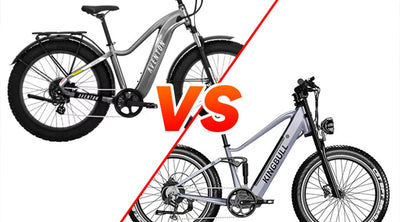
Kingbull Rover vs. Aventon Aventure.2: Off-Road Electric Bike Showdown for an Adventure-Packed Journey
In the rapidly evolving landscape of today's market, off-road electric bikes have emerged like mushrooms after the rain, providing adventure enthusiasts with unprecedented and diverse choices. This burgeoning field not only sparks technological innovations but also opens up opportunities for riders to explore uncharted territories. Whether venturing into wild mountains, traversing forested trails, or conquering rugged ridges, these electric bikes have become the ideal companions for adventurers seeking to overcome obstacles and experience the harmonious blend of speed and nature. Faced with such an extensive array of options, this article will compare the Kingbull Rover and Aventon Aventure.2. Through a thorough examination of their performance, design, and features, we aim to present a comprehensive showdown, helping you discover the electric bike that best suits the adventurous spirit within you.
Performance Overview
Kingbull Rover
Aventon Aventure.2
Motor
750W 48V Brushless Rear Hub
750W 48V Brushless Rear Hub
Battery
48V 17.5Ah lithium battery
48V, 15Ah LG Cell
Pedal Assist
5 Levels
4 Levels
Sensor
Speed
Torque
Throttle
Half Twist Throttle
Thumb Throttle
Top Speed
28 mph
28 mph
Range
Up to 60 miles
Up to 60 miles
Weight
77 lbs
77 lbs
Payload Capacity
440 lbs
400 lbs
Frame
6061 Aluminum frame with integrated battery design
Double-Butted Aluminum Alloy
Wheels
26″ x 4″ CST fat tires
26 x 4
Brakes
180mm hydraulic disc brakes
Hydraulic
Gears
Shimano 7 speed
Shimano 8 speed
Display
LCD Colorful Screen with USB
LCD Smart "Easy Read"
soft-tail
Yes
No
Price
$1,699.00
$1,999.00
Motor
Both Rover and Aventure.2 are equipped with powerful 750W 48V Brushless Rear Hub motors. The design of these high-performance motors allows them to deliver robust power during rides, effortlessly adapting to various terrains and inclines. Advantages of brushless motors include lower maintenance requirements, higher efficiency, and smoother power output. Whether for urban commuting or off-road adventures, this advanced motor technology ensures outstanding driving performance for both rover and Aventure.2, providing users with efficient and powerful electric assistance throughout their rides.
Battery
Rover is equipped with a 48V 17.5Ah lithium battery, while Aventure.2 features a 48V 15Ah LG battery. In terms of performance, Rover's battery stands out with higher capacity. However, Aventure.2 gains an advantage in battery quality by utilizing the renowned LG battery cells. It is undeniable that Aventure.2's battery may possess a certain edge in terms of quality. Yet, Rover's battery adheres to high manufacturing standards, ensuring reliability and performance that are equally competitive.
Pedal Assist
Rover offers 5 levels, while Aventure.2 provides 4 levels. This means that Rover has higher flexibility and selectivity in providing personalized electric support, catering to the diverse needs of riders.
Sensor & Throttle
Rover utilizes a speed sensor, which provides assistance by detecting the rider's pedaling motion. This sensor delivers a smooth and natural riding experience, allowing you to start your journey with ease and gradually feel the electric assistance kicking in. The sensor's quick response makes riding smarter and more adaptive, making it well-suited for various scenarios, whether you're carrying children or transporting cargo, ensuring a stable riding experience.
Aventure.2 utilize torque sensors, providing a more intelligent and responsive riding experience. Torque sensors continuously monitor the rider's force applied to the pedals, adjusting the motor's power output accordingly, delivering precise responses to the rider's cycling needs.
In terms of throttle design, the Rover features a half-twist throttle, while the Aventure.2 adopts a thumb throttle. The torque throttle has certain advantages, particularly in off-road cycling. It offers easier operation, especially on rough terrains, allowing riders to have more precise control over power output, enhancing maneuverability and flexibility.
Furthermore, the Rover's handlebars are equipped with rubber material, not only increasing comfort in hand feel but also providing enhanced friction. In off-road environments, this design ensures a secure grip for riders, offering reliable control and further enhancing the riding experience. These clever designs and configurations enable both electric bikes to perform exceptionally well in off-road cycling.
Speed & Range
The Rover boasts a top speed of 28 mph, matched by the Aventure.2 at the same impressive pace. In terms of range, both the Rover and Aventure.2 offer exceptional capabilities, covering distances of up to 60 miles on a single charge. making them equally outstanding choices for riders seeking a balance of speed and range.
Weight & Payload Capacity
Both the Rover and Aventure.2 have a weight of 77 lbs. Although the Rover and Aventure.2 share the same weight, the Rover's impressive 440 lbs payload capacity surpasses the Aventure.2's 400 lbs capacity. This difference in load-bearing capability makes the Rover an ideal choice for a diverse range of riders, providing enhanced versatility for those who require additional cargo space or fall within a broader spectrum of body weights. Whether carrying extra gear for adventurous journeys or offering comfortable support for riders of varying weights, the Rover's higher payload capacity adds an extra layer of adaptability, making it the preferred option for riders with diverse needs.
Wheels
Both Rover and Aventure.2 feature the use of robust 26" x 4.0 fat tire designs. Fat tires offer unique advantages for off-road cycling, providing a larger contact area and improved buoyancy, enhancing the stability of the vehicle across diverse terrains. This design not only increases adaptability to rough landscapes but also ensures a more comfortable riding experience for cyclists.
Additionally, Rover's tires are equipped with reflective strips, a thoughtful feature that enhances visibility in low-light conditions, thereby improving overall riding safety. Especially during nighttime or dim weather conditions, these reflective strips become crucial markers, making it easier for other road users to notice the presence of the rider. This detail underscores Rover as an off-road electric bike that prioritizes safety and practicality.
Brakes
Both the Rover and Aventure.2 are equipped with hydraulic brakes. This shared feature brings several advantages to the table. Hydraulic brakes are known for their superior stopping power and responsiveness. They offer precise control, allowing riders to modulate braking force more effectively, especially in diverse riding conditions. Additionally, hydraulic brakes require less maintenance compared to traditional mechanical systems, providing riders with a reliable and low-maintenance braking solution. Overall, the use of hydraulic brakes on both the Rover and Aventure.2 contributes to enhanced safety and a more enjoyable riding experience.
Display
Rover is equipped with a colorful LCD screen that not only provides intuitive information display but also comes with a USB interface. This color screen not only makes information clearer and more visible but also offers a more personalized experience for users during rides. Additionally, Rover's USB functionality allows riders to conveniently charge their communication devices, ensuring they always maintain sufficient power.
In contrast, Aventure.2 features an LCD Smart "easy read" screen. This design emphasizes clear and easy-to-read information, providing riders with straightforward data display. While it may not have the rich color display of the Rover, its focus on a clean and readable design allows riders to quickly access key information.
Soft-tail
Kingbull Rover is equipped with a soft-tail design, whereas Aventon Aventure.2 does not feature this. The soft-tail design provides Rover with a significant advantage in terms of shock absorption. This unique suspension system helps absorb bumps and vibrations, offering riders a smoother and more comfortable riding experience. Whether navigating rugged mountain terrains or tackling the bumps of city roads, Rover's soft-tail design enhances rider control and comfort remarkably.
Price
The standard prices for Rover and Aventure.2 are $1699 and $1999, respectively. Please note that these are the regular retail prices. However, during promotional periods, there may be adjustments to the prices. We recommend staying tuned to our website for updates and promotions. Feel free to check our website for the latest information, especially during promotional events, to take advantage of potential price reductions.
Conclusion
The Kingbull Rover and Aventon Aventure.2 stand out as top choices for off-road enthusiasts, each offering exceptional support for adventurous journeys through their unique designs and performance features. However, when considering a comprehensive evaluation of cost-effectiveness and performance, I lean towards recommending the Rover. Its outstanding performance provides riders with superior control and safety. As an additional benefit, the Rover comes with a high-lumen front light, offering a clearer nighttime visibility. Therefore, whether seeking exceptional performance or better value, the Rover remains a satisfying choice, bringing riders a more enjoyable and safer off-road experience.
Read more


