


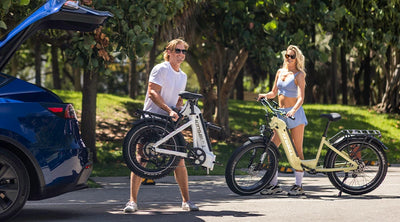






Ebike Comparison
Kingbull Expedition vs. Macfox X1S: Which Moped-Style E-Bike Offers More?
Table of Contents
1. Specs & Overall Value
2. Power, Performance & Battery Range
3. Final Thoughts
Moped-style e-bikes have a distinctive appeal. With their motorcycle-inspired frames, wide tires, and extended seats, they offer a different take on everyday electric riding. But a similar look doesn't necessarily mean a similar ride.
The Macfox X1S and Kingbull Expedition are a good example. Both feature 20-inch fat tires and a moped-inspired design, yet they approach performance quite differently. The X1S is lighter and built around a simpler riding experience. The Expedition puts more emphasis on battery capacity, motor power, and comfort over longer distances.
If you're comparing these two bikes, the real question is what you get beyond the styling. Let's take a closer look.
Kingbull Expedition vs. Macfox X1S: Specs at a Glance
Specification
Kingbull Expedition
Macfox X1S
Motor
750W
500W
Peak Motor Power
1,300W
750W
Battery
48V 31.5Ah (1,512Wh)
48V 10.4Ah (500Wh)
Max Speed
Up to 28 MPH
up to 20 MPH
Advertised Max Range
Up to 120 miles
Up to 28 miles (single battery)
Dual-Battery Range
/
Up to 56 miles
Tire Size
20" × 4.0"
20" × 4.0"
Suspension
Front and rear
Front
Brakes
Hydraulic disc
Hydraulic disc
Gearing
Shimano 7-speed
Single speed
Bike Weight
94 lbs
65 lbs
Weight Capacity
350 lbs max payload capacity
220 lbs rider weight limit
Range figures are maximum estimates under specified or ideal conditions, not guaranteed real-world results. The Macfox dual-battery configuration requires an additional battery. Rider weight limit and maximum payload capacity are different measurements.
The biggest differences are battery capacity, motor output, suspension, and overall weight. The X1S is lighter and simpler, while the Expedition offers more power, a much larger battery, and a full-suspension setup.
More Adventure for Your Money: Get More Out of Every Ride
An e-bike should be more than a way to get around. It should make you want to take the longer route, explore somewhere new, or say yes to a ride you wouldn't normally try.
If you're considering the Macfox X1S, it's worth giving the Kingbull Expedition a closer look. You don't have to spend more to get more out of your ride. In fact, the Expedition is currently priced at $1,199, compared with $1,399 for the X1S — that's $200 in savings while getting a more feature-packed e-bike.
For younger riders who enjoy trying new things and pushing beyond familiar routes, that difference matters. Why pay more for less when you can keep more money in your pocket and have more riding possibilities ahead?
A lower price doesn't mean a lower-quality experience. It's about making a smarter choice, getting more value for your money, and having more freedom to ride your way.
Power and Performance: Simple Cruising or More Riding Flexibility?
Both bikes are designed for relaxed, comfortable riding, but they offer different levels of power.The Macfox X1S uses a 500W motor with 750W peak output and a top speed of 20 MPH. Its single-speed drivetrain keeps things uncomplicated, which makes sense for riders who mainly stick to neighborhood streets and relatively flat routes.
The Expedition has a 750W motor with 1,300W peak output and reaches speeds of up to 28 MPH. It also comes with a Shimano 7-speed drivetrain. Having multiple gears gives riders more flexibility when the route changes, whether that means tackling an incline or adjusting their pedaling effort on different stretches of road.
In everyday use, the difference comes down to what you expect from your ride. The X1S keeps the experience straightforward. The Expedition gives riders more power and gearing options when their routes demand a little more.
Battery Range and Weight: More Miles, More Possibilities
A bigger battery does come with extra weight. At 94 lbs, the Kingbull Expedition is heavier than the 65-lb Macfox X1S. But in return, it packs a 1,512Wh battery with up to 120 miles of range under ideal conditions — roughly three times the capacity of the X1S's standard 500Wh battery.
For riders who want to go beyond short neighborhood trips, that extra capacity means more room for longer rides and fewer charging stops. And with front and rear suspension, the Expedition is equipped for more than just covering distance. It's built to make those extra miles count.
The key is choosing what matters more: a lighter bike for shorter rides or a more capable setup for going farther. You can also read our guide on whether more e-bike range is worth the extra weight for a closer look at this trade-off.
Final Thoughts
The Macfox X1S and Kingbull Expedition share a moped-inspired design, but they offer different riding experiences.
The X1S keeps things light and straightforward, making it a practical choice for everyday neighborhood rides. The Expedition offers a more versatile setup, combining everyday convenience with the freedom to take on longer rides, rougher roads, and new adventures. Its full suspension and greater range give riders more room to explore without limiting themselves to familiar routes.
If keeping your e-bike lightweight is your top priority, the X1S deserves a look. But if you want a Long Range Electric Bike that can handle daily rides while opening the door to more varied riding experiences, the Kingbull Expedition is worth considering.
Ready to explore more? Check out the Kingbull Expedition and see where your next ride can take you.
Read more

Ebike Comparison
Kingbull Ranger vs. Mokwheel Basalt 2.0: Two Different Takes on the Fat Tire E-Bike
When an e-bike needs to handle more than smooth pavement, fat tires, suspension, motor power, and battery capacity can all make a difference. But not every fat tire e-bike is designed around the same riding experience.
The Kingbull Ranger and Mokwheel Basalt 2.0 are two examples of this. Both combine 750W motors, 4-inch fat tires, front suspension, hydraulic disc brakes, and speeds of up to 28 MPH. But their designs take different approaches: the Ranger leans toward a vintage moped-inspired look and compact 20-inch fat tires, while the Basalt 2.0 follows a more traditional all-terrain fat e-bike setup with 26-inch wheels.
So, which style fits your riding? Here's a closer look.
Ranger vs. Basalt 2.0: At a Glance
Feature
Kingbull Ranger
Mokwheel Basalt 2.0
Motor
750W
750W
Peak Power
1300W
1100W
Torque
85 Nm
90+ Nm
Battery
48V 18Ah / 864Wh
48V 19.6Ah
Claimed Range
Up to 80 miles*
60–80 miles*
Top Speed
Up to 28 MPH
Up to 28 MPH*
Tires
20" × 4.0"
26" × 4.0"
Suspension
Dual-crown hydraulic suspension, 80mm travel
110mm adjustable front suspension
Brakes
Hydraulic disc brakes
Tektro hydraulic disc brakes
Payload
350 lbs
450 lbs
Weight
88 lbs
80 lbs
Drivetrain
Shimano 7-speed
Shimano 8-speed
*Actual range varies with terrain, rider weight, speed, assist level, weather, and other riding conditions.
1. Different Designs, Different Riding Feel
The Kingbull Ranger takes a vintage moped-inspired approach. Its long seat, compact frame, rear rack, and 20 × 4.0" fat tires give it a distinctive look that stands apart from conventional electric mountain bikes. The frame is built around a 20-inch wheel setup, while the dual-crown suspension fork provides 80mm of travel.
The Mokwheel Basalt 2.0, meanwhile, follows a more traditional fat-tire e-bike design. Its 26" × 4.0" tires and 110mm adjustable front suspension are geared toward mixed-surface riding, from paved roads and gravel to grass and light trails. Mokwheel describes the Basalt 2.0 as an all-rounder for both everyday errands and weekend rides.
That makes the choice less about one universal design being better and more about what kind of ride you want.
Ranger: vintage styling, compact fat-tire setup, and a more distinctive moped-inspired profile.
Basalt 2.0: traditional fat-tire geometry, larger wheels, and a more conventional all-terrain setup.
2. 20-Inch vs. 26-Inch Fat Tires
Both bikes use 4-inch-wide fat tires, but their wheel sizes create an important difference.
The Ranger uses 20" × 4.0" tires, while the Basalt 2.0 uses 26" × 4.0" tires.
For riders who like the compact feel and styling of a moped-style e-bike, the Ranger's smaller wheel format fits naturally with its overall design.
The Basalt 2.0's 26" wheels give it the familiar appearance of a traditional fat-tire bike. Its wide tires are designed to provide traction and stability across pavement, gravel, grass, dirt, and light trails.
In either case, the 4-inch tire width is useful when a ride goes beyond perfectly smooth pavement.
3. Motor Power and Battery Capacity
Both models use a 750W motor, but the numbers behind them are slightly different.
The Ranger is rated at 750W with up to 1300W peak power and 85 Nm of torque. It pairs that motor with a 48V 18Ah, 864Wh battery, with a claimed range of up to 80 miles under ideal riding conditions.
The Basalt 2.0 uses a 750W motor with 1100W peak power and 90Nm+ of torque. Its 48V 19.6Ah battery provides a larger 940.8Wh capacity, and Mokwheel lists a 60–80-mile range.
In simple terms, the Ranger puts more emphasis on peak motor output, while the Basalt 2.0 offers a slightly larger battery and higher published torque figure.
For either bike, real-world range will depend heavily on how and where you ride. Higher speeds, hills, rough surfaces, heavier loads, and frequent acceleration can all reduce range compared with ideal-condition estimates.
4. Suspension and Off-Road Riding
Suspension is another area where the two bikes take slightly different approaches.
The Ranger uses a dual-crown hydraulic suspension fork with 80mm of travel, designed to help absorb bumps on uneven surfaces.
The Basalt 2.0 comes with a 110mm adjustable front suspension fork. Mokwheel specifically positions the suspension for bumps encountered on gravel, uneven paths, and grass edges.
For riders regularly moving between pavement and light trails, both setups provide an alternative to a rigid fat-tire bike. Riders planning more demanding off-road routes should also consider the terrain, tire pressure, rider weight, and overall riding conditions rather than looking at suspension travel alone.
5. Cargo and Everyday Utility
Both bikes can work beyond recreational riding, but their published load ratings differ.
The Ranger has a 350 lb maximum payload and a 150 lb rear rack load limit. Its seat incorporates the rear rack into the overall design, making cargo carrying part of the bike's practical setup.
The Basalt 2.0 has a higher 450 lb total payload capacity and comes with a rear rack included.
For riders who regularly carry heavier combined loads, the Basalt 2.0's higher payload rating is worth considering. For riders who want a vintage moped-style e-bike with built-in cargo capability, the Ranger offers a different take on everyday utility.
6. Which Fat Tire E-Bike Fits Your Ride?
The Ranger and Basalt 2.0 share many of the fundamentals of a modern fat-tire e-bike, but they are aimed at somewhat different riding preferences.
The Kingbull Ranger may fit you if you want:
A vintage moped-inspired e-bike design
20"× 4.0" fat tires
Up to 1300W peak motor output
An 864Wh battery
Up to 28 MPH
A built-in rear rack with a 150 lb load limit
A distinctive bike for both everyday rides and off-road adventures
You can explore the Kingbull Ranger for the full specifications and current pricing.
Final Thoughts
The Kingbull Ranger and Mokwheel Basalt 2.0 approach the fat-tire e-bike category from two different directions.
The Ranger combines a vintage moped-style frame, 20"× 4.0" fat tires, 1300W peak power, and an 864Wh battery for riders looking for a distinctive all-terrain ride. The Basalt 2.0 takes a more traditional route with 26"× 4.0" tires, a 19.6Ah battery, 110mm front suspension, and a 450 lb payload rating.
Neither approach is designed for exactly the same rider. If your priority is a distinctive moped-inspired design and compact fat-tire setup, the Ranger offers one direction. If you prefer a conventional 26-inch fat-tire platform with a higher published payload capacity, the Basalt 2.0 offers another.
The right choice ultimately comes down to how you plan to ride, what kind of terrain you expect to encounter, and which bike fits your preferred riding style.
Read more

Ebike Comparison
Kingbull Hunter 2.0S vs. Cyrusher Zenith: Two Fat Tire E-Bikes for the Outdoors
When your rides go beyond smooth pavement, the right electric bike can make a big difference. Fat tires, suspension, strong motors, and a larger battery can help riders handle gravel roads, uneven trails, grass, and other mixed terrain with more confidence.
Two models worth comparing are the Kingbull Hunter 2.0S and the Cyrusher Zenith. Both use 26 × 4.0-inch fat tires and 750W motors, but they take slightly different approaches to outdoor riding.
⚡At a Glance: Hunter 2.0S vs. Cyrusher Zenith
Feature
Kingbull Hunter 2.0S
Cyrusher Zenith
Current Price
$899
$1,399
Motor
750W / 1300W peak
750W
Max Torque
85Nm
95Nm
Battery
864Wh (18Ah)
780Wh (15Ah)
Claimed Range
Up to 80 miles
Up to 60 miles
Top Speed
28 MPH
28 MPH
Tires
26 × 4.0" fat tires
26 × 4.0" fat tires
Suspension
Front suspension fork
Front suspension
Brakes
Hydraulic disc brakes
Hydraulic disc brakes
Drivetrain
Shimano 7-speed
Shimano 7-speed
Sensor
Cadence sensor
Torque & cadence sensors
Max Payload
400 lb
350 lb
Rider Fit
5'3"–6'6"
5'1"–6'4"
Specifications and pricing are based on the manufacturers' current product pages and may change.
⚡Power for Different Types of Riding
Both bikes offer a 750W motor and speeds up to 28 MPH, giving riders plenty of assistance for everyday riding and outdoor adventures.
The Hunter 2.0S adds up to 1300W of peak power and 85Nm of torque, providing strong assistance when riding over hills, loose surfaces, or longer routes. The Zenith is rated at 95Nm of max torque, putting more emphasis on responsive pulling power, especially when climbing.
For riders comparing the two, motor numbers are only part of the picture. Terrain, rider weight, cargo, tire pressure, and battery level can all affect how an e-bike feels on a climb.
🔋Battery & Range
Battery capacity is one of the biggest differences between these two fat tire electric bikes.
The Hunter 2.0S comes with an 864Wh battery and a claimed range of up to 80 miles under ideal conditions. The Zenith uses a 780Wh battery and is rated for up to 60 miles. Actual range will vary depending on terrain, rider weight, assist level, temperature, wind, and throttle use.
That difference matters if your typical ride involves long stretches between charging points.For shorter trail rides and weekend exploring, both provide substantial battery capacity. For riders who regularly plan longer outdoor routes, the Hunter 2.0S puts more emphasis on battery capacity and range.
🛞Fat Tires & Suspension
Both bikes use 26 × 4.0-inch fat tires, giving them a planted feel across pavement, gravel, dirt roads, and other mixed surfaces.
The Hunter 2.0S uses a front suspension fork to help absorb bumps while keeping the setup relatively straightforward.
The Zenith also uses 26 × 4.0-inch tires and adds a suspension-focused setup designed for trail and mixed-terrain riding. Cyrusher positions the Zenith specifically around trails and city riding.
If your rides frequently include rougher surfaces, suspension becomes an important part of the decision. If you mainly ride gravel roads, park paths, and smoother trails, tire size and battery capacity may matter more.
🏕️Long Rides vs. Shorter Adventures
Not every outdoor rider needs the same kind of range.
If your typical ride is a couple of hours around local trails or nearby roads, a 60-mile claimed range can provide plenty of flexibility. The Zenith's combination of torque, front suspension, and fat tires makes it suitable for riders who want to mix city riding with recreational trail rides.
The Hunter 2.0S takes a different approach. Its larger 864Wh battery and up to 80-mile claimed range are particularly useful for riders who want to spend more time riding before returning to a charger.
For day-long outdoor trips, hunting and camping trips, or longer backcountry routes, battery capacity becomes more than just a specification—it can influence how far you can plan to go.
🎒Carrying Gear on Outdoor Rides
Outdoor riding often means carrying more than just the rider.
The Hunter 2.0S supports a 400 lb maximum payload, while the Zenith is rated for 350 lb. The Hunter also has a rear rack with a listed load limit of up to 150 lb.
That can be useful for camping equipment, backpacks, groceries, or other cargo. Riders who regularly carry additional gear may want to pay particular attention to the total payload rating rather than looking only at motor power.
🎯Torque Sensor vs. Cadence Sensor
Another difference is how the two bikes respond to pedaling.
The Hunter 2.0S uses a cadence sensor, while the Zenith combines torque and cadence sensors.
A cadence sensor primarily detects whether the pedals are turning and then provides assistance based on the selected level. A torque sensor can also respond to how much force the rider puts into the pedals, which can create a more direct and natural-feeling pedal-assist experience.
This doesn't automatically make one system better for every rider. Some riders prefer the straightforward assistance of a cadence-based system, while others may value the more responsive feel of torque sensing.
🚴Everyday Use & Outdoor Versatility
A fat tire electric bike doesn't have to be limited to trails.
Both the Hunter 2.0S and Zenith can fit a variety of riding situations, from neighborhood roads and bike paths to gravel roads and recreational trails.
The Hunter 2.0S is particularly suited to riders who want one bike that can handle longer outdoor trips while also carrying additional gear. Its fat tires, 864Wh battery, 400 lb payload, lights, hydraulic brakes, and 7-speed drivetrain give it a practical setup for riders who want versatility beyond pavement.
The Zenith focuses on a similar all-terrain concept, with its 750W motor, 95Nm torque, 780Wh battery, front suspension, and 26 × 4.0-inch tires.
💰Price & Overall Value
The two bikes also sit at different price points.
The Hunter 2.0S is currently listed at $899, while the Cyrusher Zenith is listed at $1,399. That's a $500 difference based on the current listed prices.
The Zenith offers a torque-and-cadence sensor setup and a higher listed maximum torque figure. The Hunter 2.0S, meanwhile, combines a larger battery, longer claimed range, higher payload capacity, and a lower current price.
For shoppers comparing these two models, the important question isn't simply which bike has more features. It's which combination of features makes the most sense for the way you plan to ride.
🧭Which One Fits Your Ride?
Choose the Hunter 2.0S if you:
Want a lower purchase price
Prioritize battery capacity and longer rides
Need higher overall payload capacity
Ride a mix of pavement, gravel, dirt roads, and trails
Want a 26 × 4.0 fat tire electric bike for outdoor adventures
Consider the Cyrusher Zenith if you:
Put more emphasis on trail-focused comfort
Prefer its suspension setup
Want 95Nm of torque
Don't mind spending more for its equipment and design
Primarily want a fat tire e-bike for mixed city and trail riding
🌄The Bottom Line
The Kingbull Hunter 2.0S andThe Kingbull Hunter 2.0S and Cyrusher Zenith are built around a similar idea: a 26 × 4.0 fat tire electric bike that can move comfortably between pavement and outdoor terrain.
The Zenith puts more emphasis on torque output and its torque-and-cadence sensor system, while the Hunter 2.0S focuses on battery capacity, range, payload, and price.
With its 864Wh battery, up to 80-mile claimed range, 400 lb payload, 150 lb rear-rack capacity, and $899 current price, the Hunter 2.0S offers a practical setup for riders who want to travel farther and carry more without moving into a higher price bracket.
For riders planning longer adventures, carrying extra gear, or looking for a capable fat tire electric bike at a lower entry price, the Hunter 2.0S is worth putting on the shortlist.
Ready to explore beyond the pavement? The Hunter 2.0S is built to take you there.-->
Read more

Ebike Comparison
Kingbull Literider 2.0 vs. Aventon Sinch 2.5: Which Folding E-Bike Is Worth Your Money?
The global demand for personal electric mobility has skyrocketed, and finding a top-rated electric bike 2026 edition can feel overwhelming. Among the endless choices, the foldable electric bike stands out as the ultimate hybrid of rugged performance and space-saving portability. Whether you need an electric folding bike for commuting, weekend RV camping, or light trail riding, picking the right option without overpaying is the ultimate goal.
Today, we are putting two of the market's hottest wide-tire contenders head-to-head: the premium Aventon Sinch 2.5 and the high-value alternative, the Kingbull Literider 2.0.
As seen in the technical breakdown, both offer fantastic entryways into flexible riding, but they target completely different riders. Let’s dive into this ultimate folding electric fat tire bike review so you can secure the best value!
⚡ 1. Motor & Power: Raw Muscle vs. Intuitive Flow
The driving force of any high-performance fat tire ebike for adults lies in how it delivers its power.
Kingbull Literider 2.0 (The Powerhouse): Packs a robust BAFANG 750W motor pushing an impressive 80Nm of torque. Paired with a 5-level cadence sensor, it’s built for riders who want instant throttle response, effortless hill-climbing, and raw cruising power. It's a true beast for heavy terrain.
Aventon Sinch 2.5 (The Smooth Cruiser): Features a refined 500W motor (60Nm torque) paired with an advanced torque sensor. Instead of just kicking in based on pedal speed, it mirrors your actual leg effort. It gives you an incredibly natural, athletic cycling sensation with seamless efficiency.
🚀 2. Speed Limits: Daily Commute vs. Fast Lane
Where and how fast do you want to ride? Checking your local electric bicycle class laws matters!
Aventon Sinch 2.5 (Class 2 Default): Caps its pedal assist and throttle at 20 MPH out of the box. This keeps you 100% compliant with strict multi-use pathways and city parks from day one.
Kingbull Literider 2.0 (Class 3 Speed): Ships with a more aggressive setup, unlocking speeds up to 28 MPH via pedal assist. If you need a fast commuter electric bike to keep up with suburban traffic or cut down your morning commute time, this is a massive edge.
🎒 3. Payload & Utility: Light Commuting vs. Heavy Hauling
If you are searching for a heavy-duty ebike for adults to haul groceries, delivery gear, or heavy cargo, look closely at the structural frames:
Aventon Sinch 2.5: Supports a total weight of 300 lbs, with its integrated rear rack rated for up to 55 lbs—perfect for a standard backpack or light panniers.
Kingbull Literider 2.0: Built like a tank with a 400 lbs maximum payload. Even better, its reinforced rear rack handles an exceptional 150 lbs load limit. It is the clear winner for heavy-duty utility and cargo-carrying tasks.
🔋 4. Battery & Weatherproofing: Go Further, Rain or Shine
The Battery Battle: The Sinch 2.5 offers a reliable 48.8V 14Ah (636.4Wh) pack. Kingbull steps it up slightly with a 48V 15Ah (720Wh) battery, giving you more juice for throttle-heavy rides.
The Elements: Aventon features IPX5 water resistance (handles light rain). Kingbull elevates protection to an IPX6 rating, meaning it can easily handle heavy downpours and muddy trail splatters without breaking a sweat.
🛠️ 5. Comfort & Components: The Details That Matter
Both bikes ride on stable 20" × 4.0" fat tires, but their hardware differs:
Brakes & Suspension: Kingbull uses a specialized MOZO hydraulic spring fork (60mm travel) and dual-piston hydraulic brakes for maximum stopping power. Aventon counters with a highly responsive proprietary coil fork and premium Tektro hydraulic disc brakes.
Gears: Aventon gives you a smoother, micro-stepped Shimano 8-speed drivetrain. Kingbull keeps it simple and durable with a Shimano 7-speed layout.
📊 Face-To-Face Specification Summary
Component
Kingbull Literider2.0
Aventon Sinch 2.5
Ebike Class
Class 3 Ebike
Class 2 Ebike
Motor Quality
BAFANG 750W
500W
Motor Torque
80Nm
60Nm
Battery Capacity
48V 15Ah (720Wh)
48.8V 14Ah (636.4Wh)
Max Payload Capacity
400 lbs
300 lbs
Rear Rack Load Limit
150 lbs
55 lbs
Rider Height
5'2" - 6'6"
4'11" - 6'2"
Pedal Assist
5 Levels
4 Levels
Fork
MOZO hydraulic spring(60mm travel)
Aventon coil fork
Brakes
2-piston hydraulic brakes
Tektro Hydraulic brakes
Max Speed
28 MPH
20 MPH
Sensors
Cadence sensor
Torque Sensor
Rear Derailleur
SHIMANO 7-speed
SHIMANO 8-speed
Tires
CST 20" × 4.0"
Innova 20" × 4.0"
Water Resistant
IPX6
IPX5
Color
White、Green、Purple、Black
Black、Green
Price Value
$979.00
$1,799.00
Free Gift
Free (Value $94)
No
🏁 The Verdict: Premium Refinement vs. Unbeatable Value
Choosing your perfect fat tire electric folding bicycle boils down to your riding style and budget:
🌟 Choose the Aventon Sinch 2.5 if...
You want a premium, boutique-feeling ride. Its torque sensor makes pedaling feel incredibly natural, its 8-speed drivetrain is ultra-smooth, and you are willing to pay the $1,799 price tag for a high-end brand experience.
💰 Choose the Kingbull Literider 2.0 if...
You want the best affordable folding electric bike that punches way above its weight class. For just $979.00 (nearly half the price!), it gives you a bigger Bafang motor, higher top speeds, a larger battery, and double the cargo capacity. If you want heavy-duty performance without the premium price markup, Kingbull is the ultimate value winner.
❓ Frequently Asked Questions (FAQs)
Q1: What is the best affordable folding electric bike for heavy adults in 2026?
The Kingbull Literider 2.0 stands out as one of the best choices for heavier riders on a budget. While most compact e-bikes cap weight capacity at 300 lbs, Kingbull features a reinforced frame rated for a 400 lbs max payload and an industry-leading 150 lbs rear rack capacity, all for under $1,000.
Q2: What is the maintenance difference between Kingbull’s integrated mag wheels and standard spoke wheels?
The Kingbull Literider 2.0 features one-piece integrated magnesium wheels (mag wheels) instead of traditional metal spokes. The massive benefit here is zero spoke maintenance. Traditional spoke wheels require regular tensioning and can warp over rough trails or under heavy cargo. Kingbull’s mag wheels stay perfectly true forever, making them far more durable for heavy-duty hauling.
Q3: Are folding fat tire e-bikes durable enough for rainy commutes and off-road trails?
Absolutely, provided they have proper water resistance. While the Aventon Sinch 2.5 has a standard IPX5 splash rating, the Kingbull Literider 2.0 features an upgraded IPX6 water-resistance rating. This means it can safely withstand heavy rain, deep puddles, and muddy off-road trails, making it highly reliable for year-round commuting.
Read more

Ebike Comparison
Kingbull Hunter 2.0S vs. Lectric XPeak2: Two Fat Tire E-Bikes, Two Different Adventures
Some bikes are built for trails. Some are built for commutes. The best ones are built for wherever you decide to go next.
The Kingbull Hunter 2.0S and the Lectric XPeak2 are both serious fat tire electric bikes. Both are capable. Both deserve respect. But they're built around two very different ideas of what adventure means.
At a Glance
Specification
Kingbull Hunter 2.0S
Lectric XPeak2
Bike Type
Fat Tire Adventure E-Bike
eMTB-Inspired Fat Tire E-Bike
Motor
750W Brushless Hub Motor
750W Rear Hub Motor
Peak Power
1300W
1310W
Battery
48V 18Ah / 864Wh
48V 15Ah / 720Wh
Range
Up to 80 miles
Up to 60 miles
Top Speed
28 MPH
28 MPH
Tires
26" × 4.0" Fat Tires
26" × 4.0" Fat Tires
Suspension
100mm Hydraulic Fork
RST Renegade, 80mm Travel
Brakes
Hydraulic Disc Brakes
Hydraulic Disc Brakes
Pedal Assist
Cadence Sensor (5 levels + throttle)
Torque Sensor + PWR+
Gears
Shimano 7-Speed
Shimano Altus 8-Speed
Payload Capacity
400 lbs
330 lbs
Two Bikes, Two Riding Philosophies
Scenario 1: You're 40 Miles from Home
It's a Saturday morning. You've been riding for two hours through a mix of paved roads and gravel paths. You check your battery — and realize you still have plenty of range left.
That's the Hunter 2.0S experience. With an 864Wh battery delivering up to 80 miles of range, you stop thinking about the return trip and start thinking about where else you can go. The XPeak2's 720Wh battery is capable, but at 60 miles of range, that mental calculation starts earlier.
More battery isn't just a spec. It's the confidence to say yes to a longer route.
Scenario 2: The Trail Gets Rough
You hit a stretch of loose gravel, then a patch of packed dirt, then a short climb. How does each bike respond?
The XPeak2's torque sensor reads your pedaling effort and adjusts power in real time — it feels intuitive, almost like the bike is thinking with you. For riders who love technical trails and want that connected, athletic feel, it's genuinely impressive.
The Hunter 2.0S takes a different approach: consistent, strong assistance across all terrain, with a 100mm hydraulic fork absorbing the bumps so you stay comfortable over longer distances. It's less about precision control, more about riding farther without fatigue.
Trail shredder or distance explorer — both are valid. It depends on what kind of ride you're after.
Scenario 3: You're Looking at the Price Tags
Here's where things get interesting.
The XPeak2 is priced at a significant premium for its trail-focused engineering. The Hunter 2.0S comes in at $600 less — and for that difference, you get a larger battery, 20 more miles of range, more suspension travel, turn signals, a brake light, and a horn.
That's not a trade-off. That's a different value proposition entirely.
More range. More features. $600 more in your pocket — or your next adventure fund.
Which One Is Right for You?
Choose the Lectric XPeak2 if:
You want a trail-focused, mountain bike-like riding feel
Torque sensor responsiveness is your top priority
You ride technical terrain and want athletic, precise control
Choose the Kingbull Hunter 2.0S if:
You want to ride farther without range anxiety
You need a bike ready for roads, trails, commutes, and everything in between
You want serious performance — and $600 in savings to prove it
Final Thought
Final Thoughts
The best e-bike isn’t the one with the most impressive spec sheet. It’s the one that’s still with you at mile 70, on a road you’ve never ridden before, ready for whatever comes next.
Whether you choose trail control or all-day adventure, your next ride starts here.
Explore the latest Kingbull e-bike deals and limited-time offers and find the ride that’s ready for your next adventure.
Read more

Ebike Comparison
Kingbull Ranger vs. Lyric Cycles Graffiti: Which Moped Style Ebike Delivers Better Value?
As the popularity of the electric Moped bike category continues to grow, riders are looking for bikes that combine motorcycle-inspired styling, powerful performance, long range, and everyday practicality. Two models that often attract attention are the Kingbull Ranger and the Lyric Cycles Graffiti.
Both bikes embrace the classic moped style ebike design, offering comfortable riding positions, fat tires, and eye-catching retro aesthetics. However, they target slightly different audiences and price points.
In this comparison, we'll take a closer look at their specifications, riding experience, and overall value to help you determine which model best fits your needs.
Moped Style Ebike
Kingbull Ranger Ebike
Lyric Cycles Graffiti eBike
Price Value
$799.00
$2,199.00
Motor Quality
750W (1300W Peak Power)
1000W (2300W Peak Power)
Battery Capacity
48V 18Ah (864Wh)
Single: 52V 17.5Ah (910Wh)Dual: 1820Wh
Max Range
One battery: Up to 80 Miles
Dual Battery: 70-80 Miles
Top Speed
28 MPH
33 MPH
Pedal Assist
5 Levels
9 Levels
Fork
Dual-crown hydraulic suspension (80mm travel)
120 mm Front Fork
Brakes
Hydraulic Brakes
4 Piston Hydraulic Brakes
Sensors
Cadence Sensor
/
Rear Derailleur
SHIMANO 7-speed
/
Light
48V LED headlights, 48V tail light, brake highlight, left/right turn signals
Integrated Tail Light
Max Payload Capacity
350 lbs + 150 lbs
325 lbs
Rider Height
5'0" - 6'3"
4'6" - 5'11"
Design & Styling: Two Takes on the Retro Moped Look
Both the Ranger and Graffiti fall squarely into the growing Retro Electric Bike segment. Their motorcycle-inspired frames, long bench seats, and oversized tires create an unmistakable urban cruiser appearance.
The Lyric Graffiti leans toward a premium custom-moto aesthetic, featuring a sleek frame design and higher-end performance components. It's a bike that turns heads and appeals to riders who prioritize style and speed.
The Kingbull Ranger, meanwhile, captures the same retro-inspired spirit while maintaining a more accessible price point. For riders searching for a retro electric Moped bike that delivers everyday practicality without a premium price tag, the Ranger presents an attractive option.
The result is that both bikes look great, but the Ranger makes the moped-style riding experience available to a much broader range of riders.
Motor Performance: More Power vs. Practical Power
When comparing motors, the Graffiti clearly offers higher output.
Lyric Cycles Graffiti
1000W motor
Up to 2300W peak power
33 MPH top speed
This setup delivers strong acceleration and higher top-end performance, making it appealing for experienced riders seeking a more motorcycle-like riding experience.
Kingbull Ranger
750W motor
1300W peak power
28 MPH top speed
While the numbers are lower on paper, the Ranger still provides more than enough power for commuting, recreational riding, neighborhood cruising, and moderate hills.
For many riders, 28 MPH already reaches the practical limit of what they regularly use. The Ranger's motor strikes a balance between performance, efficiency, and affordability, helping keep costs low without sacrificing everyday usability.
Battery & Range: Surprising Value from the Ranger
Battery capacity is one of the most important considerations when purchasing an electric bike.
Lyric Cycles Graffiti
The Graffiti comes with:
Single battery: 910Wh
Optional dual battery: 1820Wh
The dual-battery setup is particularly attractive for riders who routinely take long-distance rides and want maximum range.
Kingbull Ranger
The Ranger includes:
48V 18Ah battery
864Wh total capacity
Up to 80 miles
What's impressive is how closely the Ranger's standard battery capacity approaches the Graffiti's single-battery configuration.
Considering the significant price difference between the two bikes, the Ranger delivers remarkable battery value. Riders can enjoy long-range adventures without paying for a premium dual-battery system they may never fully utilize.
Speed & Riding Experience
Speed is often one of the first specifications riders compare.
The Graffiti's 33 MPH top speed provides an extra performance edge and may appeal to enthusiasts who enjoy faster riding.
The Ranger's 28 MPH top speed aligns with Class 3 ebike performance and remains more than capable for:
Daily commuting
Urban riding
Bike path travel
Weekend exploration
Many riders discover that comfort, reliability, and range have a greater impact on daily satisfaction than a few additional miles per hour.
For that reason, the Ranger's speed profile feels well-balanced for the average rider.
Suspension & Comfort
Comfort is critical for any electric Moped bike, especially on longer rides.
Lyric Cycles Graffiti
The Graffiti features:
120mm front suspension travel
The longer travel helps absorb larger bumps and rougher terrain.
Kingbull Ranger
The Ranger includes:
Dual-crown hydraulic suspension
80mm suspension travel
Although it offers less travel, the dual-crown design provides excellent front-end stability and contributes to the motorcycle-inspired appearance that many riders love.
For urban roads, paved trails, and light off-road use, the Ranger delivers a comfortable and controlled ride while maintaining excellent value.
Braking Performance
Both bikes are equipped with hydraulic braking systems, which provide stronger stopping power and improved modulation compared to mechanical brakes.
Graffiti
4-piston hydraulic brakes
Ranger
Hydraulic brakes
The Graffiti's 4-piston setup offers additional braking performance, particularly beneficial at higher speeds.
However, the Ranger's hydraulic brakes remain more than adequate for its 28 MPH speed profile and everyday riding scenarios.
Drivetrain & Ride Control
One area where the Ranger provides additional transparency and versatility is its drivetrain setup.
Kingbull Ranger
Shimano 7-speed
Cadence sensor
5 pedal-assist levels
The Shimano system gives riders flexibility when tackling hills, adjusting cadence, or extending battery life.
Lyric Cycles Graffiti
9 pedal-assist levels
Drivetrain details not listed in the data
The additional assist levels may provide finer tuning, but many riders find five well-calibrated assist levels sufficient for daily use.
Lighting & Safety Features
Safety features become increasingly important for commuters and evening riders.
Kingbull Ranger
Includes:
48V LED headlight
Tail light
Brake light
Split Turn Signal Lamps
Lyric Cycles Graffiti
Includes:
Integrated tail light
The Ranger's more comprehensive lighting package improves visibility and convenience while reducing the need for aftermarket upgrades.
For commuters riding in traffic or after dark, built-in turn signals can be a particularly valuable feature.
Payload Capacity: A Strong Advantage for Larger Riders
Payload capacity is often overlooked but can dramatically affect real-world usability.
Kingbull Ranger
350 lbs rider capacity
Additional 150 lbs rear rack capacity
Lyric Cycles Graffiti
325 lbs payload capacity
This makes the Ranger especially appealing for:
Cargo hauling
Grocery runs
Delivery use
Larger riders
Heavy riders seeking additional carrying capacity
The Ranger's robust payload capability significantly expands its versatility for everyday transportation.
Rider Fit & Accessibility
The two bikes accommodate different rider heights.
Kingbull Ranger
Fits riders from 5'0" to 6'3"
Lyric Cycles Graffiti
Fits riders from 4'6" to 5'11"
The Ranger's wider fit range makes it a strong option for taller riders who may find some moped-style bikes less comfortable.
Value Comparison: Where the Ranger Really Shines
The most significant difference between these two bikes is price.
Kingbull Ranger: $799
Lyric Cycles Graffiti: $2,199
The Graffiti justifies its premium positioning with:
More motor power
Higher top speed
Larger optional battery system
Upgraded braking components
However, the Ranger delivers many of the features riders care about most:
Long range
Hydraulic brakes
Dual-crown suspension
Shimano drivetrain
Turn signals
High payload capacity
Comfortable moped-style design
At nearly one-third of the price, the Ranger offers exceptional cost-to-performance value.
For riders searching for an under $1000 ebike, finding a model with this combination of range, comfort, features, and styling is increasingly rare.
Final Verdict
The Lyric Cycles Graffiti is a compelling premium Retro Electric Bike that caters to riders seeking higher speeds, greater power, and an elevated performance experience.
The Kingbull Ranger takes a different approach. Rather than chasing maximum specifications, it focuses on delivering the features most riders actually use—solid power, impressive range, hydraulic brakes, comfort-focused suspension, useful safety features, and outstanding carrying capacity—at a remarkably affordable price.
If your priority is maximum performance and premium components, the Graffiti is worth considering. But if you're looking for a stylish moped style ebike that balances performance, practicality, and affordability, the Kingbull Ranger stands out as one of the strongest value options in today's market and an excellent choice for riders seeking a feature-rich retro electric Moped bike without the premium price tag.
Read more


